






|
Signature Sponsor


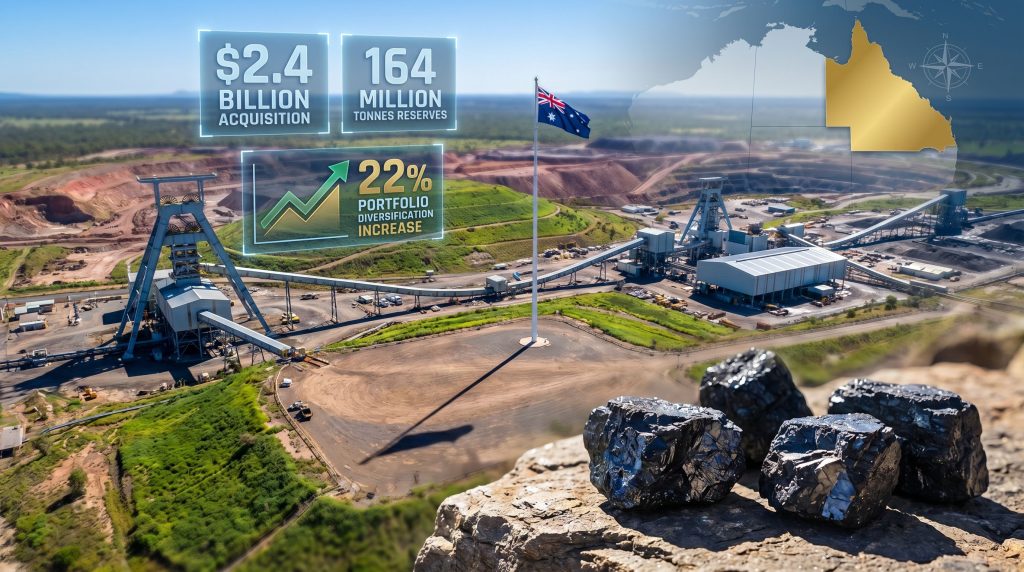
April 22, 2026 - The Australian mining sector continues witnessing unprecedented consolidation as strategic buyers pursue high-quality assets amid increasingly competitive commodity markets. The recent announcement that Yancoal to acquire Kestrel Coal Mine represents a landmark transaction valued at up to US$2.4 billion, marking one of the most significant coal mining acquisitions in Australian history. This strategic move demonstrates the compelling value proposition of premium metallurgical coal operations and highlights ongoing mining consolidation insights driving industry transformation.
Understanding Australia's Largest Coal Mining Acquisition in 2026
Strategic Context Behind Yancoal's Bold Move Yancoal Australia's pursuit of an 80% interest in the Kestrel Coal Mine through a comprehensive US$2.4 billion acquisition framework demonstrates sophisticated strategic positioning within Australia's premium metallurgical coal sector. The transaction structure incorporates an upfront cash consideration of US$1.85 billion payable at completion, supplemented by contingent cash consideration reaching up to US$550 million distributed annually over five years when specific market pricing thresholds are achieved. This acquisition represents Yancoal's most significant capital deployment to date, funded through a carefully engineered combination of available cash reserves, a US$1.2 billion five-year syndicated acquisition loan facility, and projected cash flows from the enlarged business operations. Additionally, a US$200 million five-year committed working capital facility provides operational liquidity during the integration period, demonstrating comprehensive financial planning for portfolio expansion. The strategic rationale extends beyond simple asset accumulation, targeting portfolio diversification that increases metallurgical coal production to 22% of total output on a pro forma basis. This diversification reduces Yancoal's exposure to thermal coal market volatility while positioning the company within the premium metallurgical coal segment that commands superior pricing and maintains stronger demand fundamentals from global steelmaking operations.
Market Conditions Driving Metallurgical Coal Consolidation Current metallurgical coal market dynamics favor consolidation among high-quality assets as global steel production requirements continue demanding premium coking coal specifications despite broader energy transition pressures. Furthermore, the ongoing mining evolution trends indicate increasing focus on operational excellence and premium asset positioning. Kestrel's classification as producing premium metallurgical product with high fluidity and plasticity, low ash content, and minimal deleterious elements positions it within the upper tier of global coking coal quality standards. These specifications command sustained price premiums in international markets. The contingent payment mechanism tied to the Platts Premium Low Vol Hard Coking Coal FOB Australia Index reflects sophisticated risk management that aligns buyer and seller interests around future market performance. This indexing approach protects Yancoal from overpaying during potential market downturns while providing sellers upside participation if metallurgical coal markets strengthen beyond baseline expectations during the 2026-2031 measurement period. Market consolidation pressures intensify as premium metallurgical coal assets become increasingly scarce. Underground operations requiring substantial technical expertise and capital investment create barriers to new entrant competition, making established operations like Kestrel highly valuable strategic assets.
Geographic Significance of Queensland's Bowen Basin Queensland's Bowen Basin represents one of the world's premier metallurgical coal producing regions, with established mining infrastructure, dedicated rail networks, and export terminal access. Kestrel's location provides strategic proximity to Yancoal's existing Middlemount joint venture and Yarrabee operation, creating opportunities for infrastructure sharing and consolidated logistics. Geographic clustering within the Bowen Basin enables Yancoal to optimize supply chain coordination, potentially consolidate administrative functions, and leverage shared workforce capabilities across multiple operations. The region's established mining service sector, skilled labour availability, and regulatory familiarity reduce integration risks while providing known operational contexts. The Bowen Basin's geological characteristics have produced multiple world-class metallurgical coal deposits with varying specifications. This allows Yancoal to develop a diversified product portfolio serving different steelmaking customer requirements and market segments.
What Makes the Kestrel Mine Australia's Premier Underground Operation?
Production Scale and Operational Excellence Metrics Kestrel achieved saleable production of 5.9 million tonnes during 2025 on a 100% basis, establishing its position as Australia's largest producing underground coal mine. This production volume demonstrates exceptional operational scale within the technically demanding underground mining sector.
The mine's designation as benchmarking within the top-two Australian underground operations on key productivity measures reflects operational management excellence. Underground coal mining requires sophisticated technical coordination including ventilation systems, roof support engineering, and extraction sequencing that must balance production optimisation with safety requirements and environmental compliance. Kestrel's 25-year mine life projection, underpinned by 164 million tonnes of Marketable Coal Reserves, provides exceptional operational continuity that supports long-term customer relationships. The additional 406 million tonnes of total Coal Resources represents substantial expansion potential beyond current production planning.
Premium Metallurgical Coal Quality Specifications Kestrel produces premium metallurgical coal characterised by high fluidity and plasticity properties, low ash content, and minimal deleterious elements. These technical specifications are specifically demanded by steelmakers seeking superior coking coal inputs for blast furnace operations and directly determine market positioning relative to commodity-grade metallurgical coal benchmarks. Key Quality Parameters: • High Fluidity and Plasticity: Superior Gieseler plasticity values enable optimal coke formation during steelmaking processes • Low Ash Content: Reduced ash percentages improve coke reactivity and blast furnace productivity • Minimal Deleterious Elements: Low sulfur, phosphorus, and alkali metal content enhances coke quality • Consistent Specifications: Reliable quality parameters support long-term customer contracts and premium pricing The technical characteristics of Kestrel's coal are geologically determined by the depositional environment and thermal maturity of the coal seams. This means these premium specifications reflect inherent deposit quality rather than beneficiation processes alone, creating sustainable competitive differentiation that cannot be easily replicated. Global steelmakers demonstrate strong preference for premium coking coal specifications to optimise blast furnace performance, minimise coke consumption, and maintain steel quality standards. The characterisation of Kestrel's product as being "in high demand from steelmakers" reflects established market relationships and proven customer acceptance across diverse steelmaking applications.
Resource Base and Mine Life Economics Kestrel's resource foundation combines immediate production capability through 164 million tonnes of Marketable Coal Reserves with substantial future optionality represented by 406 million tonnes of total Coal Resources. This resource structure provides both operational certainty for current planning and strategic flexibility for future expansion scenarios. The 25-year mine life projection creates exceptional asset durability that supports long-term strategic planning, customer relationship development, and capital investment optimisation. Few global coal assets offer comparable operational longevity combined with premium product specifications and proven operational performance. "Resource Classification Framework: The distinction between Marketable Coal Reserves (164 million tonnes) and total Coal Resources (406 million tonnes) reflects different levels of geological confidence and economic viability, with reserves representing higher-confidence, economically viable resources under current market conditions." Mine life economics benefit from underground extraction methods that can selectively target premium coal seams while avoiding lower-quality material. This enables Kestrel to maintain consistent product specifications throughout its operational timeline, contrasting with surface mining operations that may encounter variable coal quality.
How Does This $2.4 Billion Deal Structure Work?
Upfront Payment Analysis The acquisition's upfront cash consideration of US$1.85 billion represents approximately 77% of the total potential transaction value, providing immediate liquidity to sellers while demonstrating Yancoal's confidence in the asset's fundamental value. This substantial initial payment reflects current asset valuation based on existing operational performance, reserve base, and market positioning. Yancoal's funding strategy combines available cash reserves with a US$1.2 billion five-year syndicated acquisition loan facility, indicating strong debt market confidence in both the acquiring company's creditworthiness and the underlying asset quality. The syndicated loan structure distributes credit risk across multiple banking partners while providing competitive financing terms. Funding Structure Breakdown:
The financial engineering demonstrates sophisticated capital raising methods that balance immediate acquisition funding with future flexibility for contingent consideration payments based on operational performance and market conditions.
Contingent Payment Framework The contingent cash consideration structure creates a performance-based adjustment mechanism that can reach up to US$550 million distributed annually over five years. This occurs when the Platts Premium Low Vol Hard Coking Coal FOB Australia Index exceeds specified pricing thresholds, aligning buyer and seller interests around metallurgical coal market performance.
The Platts PLVHA Index represents the established benchmark for premium hard coking coal pricing in Australian export markets. This provides transparent and objective measurement criteria for contingent payment activation, eliminating subjective valuation disputes while ensuring payment triggers reflect genuine market strength. Annual payment distribution over five years provides Yancoal with cash flow management flexibility while offering sellers sustained upside participation if metallurgical coal markets strengthen. The extended timeline recognises that commodity market cycles may require multiple years to demonstrate sustained pricing strength that justifies additional consideration payments.
Financial Engineering Behind the Acquisition The transaction's financial architecture demonstrates sophisticated deal structuring that optimises capital efficiency, risk management, and strategic flexibility for both buyer and seller. Yancoal's combination of debt and equity financing minimises dilution to existing shareholders while leveraging the acquired asset's cash generation capacity. The US$200 million working capital facility provides operational buffer capacity during integration, recognising that large-scale mining acquisitions may experience temporary disruption or require additional working capital during ownership transition. This facility demonstrates proactive liquidity management that protects operational continuity. Risk Management Elements: • Contingent Structure: Protects against overpayment during market downturns The financial engineering reflects institutional-grade transaction structuring that balances competing stakeholder interests while creating sustainable capital structure for the enlarged business. However, the combination of immediate value realisation for sellers with upside participation through contingent payments represents sophisticated compromise that facilitates transaction completion.
Why This Acquisition Transforms Yancoal's Strategic Position
Portfolio Diversification Impact The Kestrel acquisition fundamentally reshapes Yancoal's portfolio composition by increasing metallurgical coal production to 22% of total output on a pro forma basis. This provides significant diversification benefits that reduce exposure to thermal coal market volatility while positioning the company within premium market segments that command higher prices. Metallurgical coal demonstrates distinct market characteristics from thermal coal, with demand tied to global steel production rather than electricity generation. This creates different cyclical patterns and price sensitivity profiles, providing natural hedging against thermal coal market pressures while capturing premium pricing available to high-quality coking coal producers. The strategic diversification extends beyond product mix to include operational diversification through underground mining capability that complements Yancoal's existing surface mining expertise. Underground operations require different technical competencies, equipment specifications, and operational management approaches that broaden the company's technical capabilities.
Competitive Positioning in Global Markets Kestrel's premium metallurgical coal specifications position Yancoal to serve high-end steelmaking markets that demand superior coking coal quality for blast furnace optimisation and steel quality maintenance. These premium market segments typically demonstrate stronger demand stability and pricing power compared to commodity-grade metallurgical coal markets. The acquisition enhances Yancoal's scale within the Australian metallurgical coal export sector, creating opportunities for improved marketing coordination, customer relationship leverage, and supply chain optimisation across the enlarged portfolio. Increased scale enables more sophisticated customer engagement strategies and potentially improved contract negotiation power with global steelmaking customers. Strategic Market Advantages: • Premium Product Access: High-quality coking coal for demanding applications The competitive positioning benefits extend to potential market share consolidation within Australia's metallurgical coal export sector. Yancoal's enlarged capacity and premium product portfolio create opportunities for strategic customer relationships and market leadership in specific quality segments.
Operational Synergy Potential Geographic proximity between Kestrel and Yancoal's existing Middlemount joint venture and Yarrabee operation within Queensland's Bowen Basin creates substantial opportunities for operational synergy realisation. These synergies can generate both cost reductions and operational efficiency improvements across the regional portfolio through infrastructure sharing, consolidated logistics, and coordinated operational management. Potential synergy areas include shared transportation infrastructure, consolidated maintenance services, coordinated workforce management, and integrated supply chain optimisation. The Bowen Basin's established mining infrastructure enables economies of scale through shared utilisation of rail capacity, port allocation coordination, and regional service provider relationships. Synergy Categories:
The retention of Mitsui's 20% joint venture partnership in Kestrel provides operational continuity during the ownership transition while maintaining established management relationships that have contributed to the mine's operational excellence. This partnership structure enables knowledge transfer and operational best practice sharing that can benefit the broader Yancoal portfolio.
What Are the Key Risk Factors and Regulatory Hurdles?
Foreign Investment Review Board (FIRB) Considerations The Yancoal to acquire Kestrel Coal Mine transaction requires Foreign Investment Review Board approval due to Yancoal's ownership by Chinese parent company Yankuang Energy. This creates regulatory review processes that examine the transaction's implications for Australian national interests and resource security. FIRB assessment considers factors including critical infrastructure, supply chain security, and foreign ownership concentration within strategic industry sectors. The FIRB review process typically evaluates transactions involving significant Australian resource assets under foreign ownership, particularly when acquiring companies have connections to foreign governments or state-controlled entities. FIRB Assessment Factors: • National Interest Test: Impact on Australian economic and security interests The targeted completion timeline of Q3 2026 incorporates anticipated regulatory review periods, but approval conditions or delays could impact transaction execution. FIRB approvals may include operational conditions, reporting requirements, or ownership limitations that affect future strategic flexibility for the enlarged business.
Market Risk Assessment Metallurgical coal price volatility creates significant exposure for the enlarged Yancoal business, with the contingent payment structure directly linking additional consideration to future market performance through the Platts Premium Low Vol Hard Coking Coal Index. While this indexing provides upside participation for sellers, it also creates cash flow volatility for Yancoal based on factors beyond direct operational control. Global steel demand fluctuations represent the primary driver of metallurgical coal market dynamics, with economic cycles, infrastructure investment patterns, and steel industry consolidation affecting coking coal consumption patterns. Regional steel production changes, particularly in Asian markets that represent primary destinations for Australian metallurgical coal exports, create demand uncertainty that impacts pricing and volume realisation. Primary Risk Categories:
Environmental regulatory evolution presents long-term risks as governments implement climate change policies that may affect coal mining operations, export approvals, or customer demand patterns. While metallurgical coal faces different regulatory pressures than thermal coal due to steel industry requirements, evolving environmental frameworks create policy uncertainty that may impact long-term asset values.
Integration Challenges and Mitigation Strategies Large-scale mining acquisition integration requires careful coordination of operational systems, workforce management, and cultural alignment that can temporarily impact production efficiency and operational performance. Underground mining operations involve specialised technical expertise and safety protocols that require maintained continuity during ownership transitions to prevent operational disruption. The joint venture structure with Mitsui's retained 20% partnership creates governance complexity that requires coordinated decision-making and aligned strategic priorities between multiple stakeholders. While existing joint venture relationships provide operational stability, managing enlarged partnership dynamics requires sophisticated governance frameworks and clear operational authority definitions. Integration Risk Mitigation: • Operational Continuity: Retaining key technical personnel and management systems Workforce and community relations management during ownership transition requires sustained engagement with local stakeholders, regulatory authorities, and employee representatives to maintain social license and operational acceptance. The Bowen Basin's established mining community provides familiar stakeholder contexts, but large-scale ownership changes require proactive communication and relationship management.
How Does This Compare to Recent Australian Mining M&A Activity?
Transaction Valuation Metrics The US$2.4 billion total enterprise value for Kestrel represents one of the largest Australian coal mining acquisitions in recent years, reflecting both asset quality and current market conditions that support premium valuations for proven metallurgical coal operations. The transaction's scale and structure provide benchmarking data for evaluating similar high-quality underground coal assets within Australia's established mining regions.
The approximately US$407 per annual tonne production multiple (based on 5.9 million tonnes 2025 production) reflects premium valuation for established, high-performing underground operations with proven operational track records. This production multiple exceeds typical thermal coal acquisition metrics, demonstrating market recognition of metallurgical coal's superior economics and operational requirements. The reserve-based valuation of approximately US$14.6 per tonne of Marketable Coal Reserves (164 million tonnes) incorporates both immediate economic value and long-term strategic positioning within premium metallurgical coal markets. This reserve multiple reflects geological quality, operational accessibility, and market positioning advantages that justify premium acquisition pricing relative to commodity-grade coal assets.
Strategic Buyer vs. Financial Buyer Trends EMR Capital's divestment of Kestrel represents a successful private equity exit strategy that realises substantial returns on investment while transferring ownership to a strategic industry operator capable of maximising long-term asset value. Private equity sponsors typically target 3-7 year hold periods with return multiples that justify the risk and capital intensity of mining investments. Strategic buyers like Yancoal can justify higher acquisition valuations than financial buyers due to operational synergy potential, portfolio integration benefits, and longer investment horizons that capture full commodity cycle returns. The strategic buyer premium reflects both consolidation benefits and operational expertise that can enhance asset performance beyond financial optimisation approaches. Buyer Category Comparison: • Strategic Buyers: Portfolio integration, operational synergies, long-term commodity exposure The transaction demonstrates healthy exit markets for mining private equity investments, supporting continued financial sponsor interest in Australian resource sector opportunities. Successful exit execution encourages future private equity investment in mining development and operational improvement strategies that create value for subsequent strategic acquisition.
Long-Term vs. Short-Term Value Creation Approaches Strategic buyers typically pursue value creation through operational integration, market positioning, and long-term commodity cycle participation rather than financial engineering or short-term optimisation strategies. Yancoal's acquisition approach emphasises portfolio diversification, operational synergies, and market positioning advantages that create sustained competitive benefits rather than immediate financial returns. The 25-year mine life projection aligns with strategic buyer investment horizons that can capture multiple commodity cycles, technological evolution, and market development opportunities. This long-term perspective contrasts with financial buyer approaches that typically target shorter hold periods and exit strategies based on operational improvement and market timing. Financial buyers often focus on operational efficiency improvements, cost optimisation, and market positioning enhancements that create value within 3-7 year investment horizons. EMR Capital's successful development and optimisation of Kestrel during its ownership period demonstrates effective financial sponsor value creation that prepares assets for strategic buyer acquisition at premium valuations.
What Does This Mean for Australia's Coal Export Industry?
Supply Chain Concentration Effects The Yancoal to acquire Kestrel Coal Mine transaction creates increased market concentration within Australia's premium metallurgical coal export sector, potentially affecting competitive dynamics, customer relationships, and pricing power across the industry. Concentration effects may influence export terminal allocation, shipping coordination, and customer negotiation leverage as major producers consolidate market share. Australian coal export infrastructure, including dedicated rail networks and specialised port facilities at Gladstone and other terminals, operates at near capacity during peak periods. This creates potential bottlenecks that favour larger producers with coordinated logistics capabilities, and Yancoal's enlarged Queensland portfolio may provide operational advantages through improved infrastructure utilisation and shipping coordination. Market Concentration Implications:
The concentration of high-quality metallurgical coal production among fewer operators may provide more predictable supply patterns for international customers while potentially increasing pricing discipline during market downturns. However, concentration effects also create regulatory scrutiny regarding competition policy and market power considerations in the global mining landscape.
Investment Climate Signals The successful completion of a US$2.4 billion coal mining acquisition demonstrates continued international investor confidence in Australian mining jurisdiction stability, resource quality, and operational excellence standards. Foreign investment in large-scale Australian mining assets signals positive perceptions of regulatory frameworks, infrastructure quality, and market access capabilities. Chinese investment through Yancoal's parent company Yankuang Energy reflects continued strategic interest in securing metallurgical coal supply chains despite evolving geopolitical relationships and environmental policy pressures. This investment confidence suggests that metallurgical coal's essential role in steel production maintains strategic importance for resource security considerations. The transaction's debt financing success through syndicated loan facilities demonstrates banking sector confidence in both coal industry fundamentals and specific asset quality. Major international banks' willingness to provide substantial acquisition financing indicates positive risk assessment for established, high-quality metallurgical coal operations.
Future Consolidation Prospects The Kestrel acquisition may catalyse additional consolidation activity within Australia's coal sector as remaining high-quality assets become increasingly scarce and strategic buyers pursue portfolio optimisation through selective acquisition. Premium underground metallurgical coal operations represent particular consolidation targets due to their technical requirements and market positioning advantages. Consolidation Drivers: • Asset Scarcity: Limited high-quality metallurgical coal operations available for acquisition Other Bowen Basin metallurgical coal assets may attract acquisition interest as strategic buyers seek to replicate Yancoal's geographic clustering strategy and operational synergy realisation. The success of this acquisition model may encourage similar consolidation approaches by competing major producers seeking portfolio enhancement opportunities. Private equity sponsors may accelerate portfolio optimisation strategies in response to demonstrated exit market strength, potentially bringing additional high-quality assets to market for strategic buyer acquisition. The successful EMR Capital exit creates precedent for mining private equity value realisation that encourages continued sector investment and development activity.
Key Takeaways for Industry Stakeholders
Investment Implications The Yancoal to acquire Kestrel Coal Mine transaction demonstrates that premium metallurgical coal assets command substantial valuation multiples that reflect both operational quality and strategic scarcity within global coking coal markets. Investors seeking exposure to metallurgical coal should focus on assets with proven operational excellence, superior product specifications, and long-term reserve bases that support sustained market positioning advantages. Quality asset scarcity drives premium valuations that may justify aggressive acquisition strategies for strategic buyers with operational integration capabilities and long-term commodity market exposure objectives. The transaction's success indicates continued debt financing availability for well-structured mining acquisitions backed by proven assets and experienced operators. Investment Considerations: • Quality Premium: Superior assets justify significant valuation multiples Risk-adjusted return expectations should incorporate commodity price volatility, regulatory evolution, and operational integration challenges that affect mining investment performance. The contingent payment structure provides insight into market-based risk sharing approaches that align buyer and seller interests while managing price discovery uncertainty.
Operational Excellence Benchmarks Kestrel's designation as a top-two Australian underground mine on key productivity measures establishes performance benchmarks that demonstrate the operational standards required for premium market positioning and strategic acquisition attractiveness. These benchmarks encompass safety performance, production efficiency, cost management, and environmental compliance excellence. Underground mining operations require specialised technical expertise, sophisticated safety management, and advanced equipment utilisation that create barriers to competitive replication. The operational excellence standards achieved by Kestrel provide templates for performance improvement strategies across the underground coal mining sector. Technology adoption and operational innovation continue driving performance improvements in underground mining, with automation, predictive maintenance, and integrated planning systems enhancing productivity while improving safety outcomes. These technological capabilities represent essential competitive advantages for maintaining market leadership positions, reflecting current industry leadership trends.
Market Outlook Considerations Metallurgical coal demand fundamentals remain supported by global steel production requirements despite evolving environmental policies and alternative steelmaking technology development. Premium coking coal specifications maintain strategic importance for blast furnace operations that continue dominating global steel production capacity. Geographic diversification benefits favour Australian metallurgical coal producers due to established infrastructure, proven operational capabilities, and proximity to Asian steel markets that represent primary demand centres. The Bowen Basin's geological advantages and infrastructure development provide sustainable competitive positioning for long-term market participation. Market Outlook Factors: • Steel Demand Stability: Continued requirement for premium coking coal in blast furnace operations Long-term energy transition considerations create uncertainty regarding coal industry evolution, but metallurgical coal's essential role in steel production provides different risk profiles compared to thermal coal applications. Strategic positioning within premium market segments and operational excellence remain critical for navigating industry transition challenges while maintaining competitive advantages. This analysis is based on publicly available information and industry sources. Investment decisions should consider additional factors including detailed financial analysis, technical due diligence, and professional investment advice. Commodity investments involve substantial risks including price volatility, operational hazards, and regulatory changes that may affect investment returns.
|










|