







|
Signature Sponsor


May 27, 2026 - On Main Street in the small village of Shawnee, Ohio construction activity in and around the Tecumseh Theater rings out through the otherwise calm downtown area.
“It feels surreal. I get chills pretty much on the daily,” said Melissa Wales, the Executive Director of Sunday Creek Associates, the nonprofit that runs the theater.
Wales said the ongoing restoration project is working toward renovating and restoring the Tecumseh Theater, which was built in 1908.
“The Tecumseh Theater, when it was built, was the tallest building in Perry County, and many argue it still is,” Wales said.
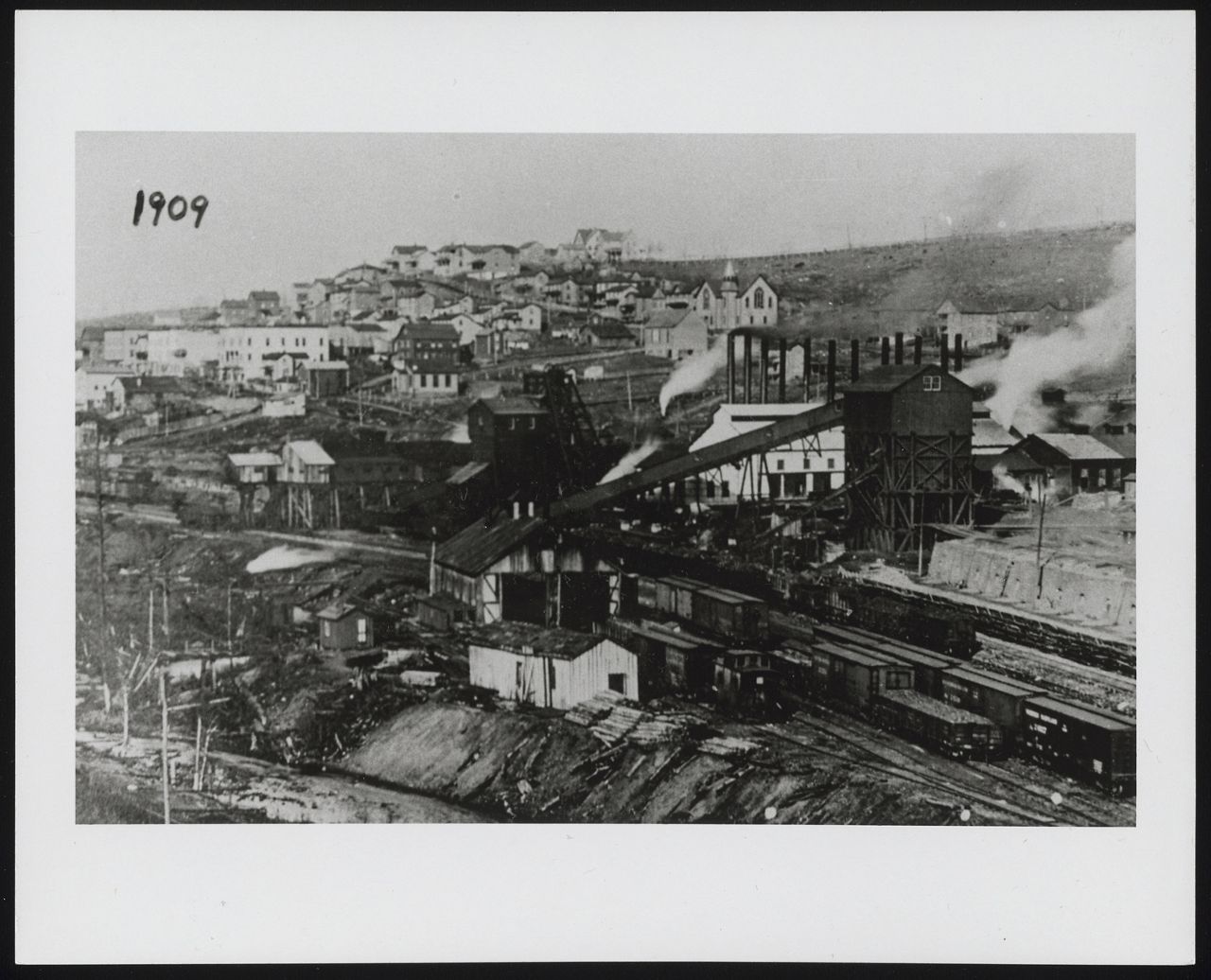
Standing three stories tall, the building is a living monument of the small community's coal mining past. Near the Wayne National Forest in Ohio’s Appalachia region, Shawnee is part of a group cities known as "The Little Cities of Black Diamonds." These are all cities in southeast Ohio that sprang up around the coal industry at the turn of the 20th century.
An aerial view of Shawnee in 1909. Frank Buhla Collection, Mahn Center for Archives and Special Collections, Ohio University Libraries
“At its peak, there were around 4,000 to 5,000 people living in Shawnee,” Wales said. “As these coal towns sprang up, you had these theaters, which were often called upper houses here in Appalachia, Ohio, as multi-purpose venues for the community. On the first floor, these spaces would have been used for commercial business, pharmacies, confectionaries, anything like that. The second floor space was the theater or opera house.”
Besides holding theatrical and musical performances, the theater also held basketball games, dances and high school graduations.
“It was, in its day, a major venue for entertainment and community engagement in the region," Wales said.
The third floor of the theater, which is not part of the ongoing renovations, was the ballroom and meeting space.
The theater was built in 1908 by a fraternal organization called the Improved Order of the Red Men, which copied titles from Native American communities, but was only open to white men. It was the first building in the region to use steel I-beam construction.
After the rise of motion pictures, the first floor was converted into a movie theater.
“The sign behind me is for The New Linda, that was the name of the movie theater that occupied this first floor space,” Wales said. “A night out in the 1950s would be coming to the latest premiere in Shawnee and then going upstairs and having a dance.”
By the 1960s, the population of Shawnee had been dwindling for decades.
“The theater operator ended up closing it in 1960 and it sat sort of abandoned and unused until the mid-1970s,” she said.
The owner of the theater got an offer from someone who wanted to tear the building down for the steel in it.
“It had steel I-beam construction, and they wanted the steel out, and they were going to give them $500 to tear it down,” said John Winnenberg, the former Director of Sunday Creek Associates.
Winnenberg grew up in the area and heard the news of the potential demolition the summer after he graduated college.
“My friend Skip down the street and his wife Judy found out that there were people in town to tear the building down. He went to the owner and said, ‘You can’t let this happen.’” Winnenberg said. “And he said, ‘You give me $500, and it’s yours.’”
Winneberg said Skip borrowed the $500 dollars from his dad and bought the building in 1976. Together, they renamed the theater the ‘Tecumseh Theater’ in order to strike a more respectful tone while invoking local history by honoring Tecumseh, a Shawnee chief and warrior.
“We formed a group to own it and operate it,” Winneberg said.
They had their work cut out. The theater was in rough shape.
“There was water coming through the entire building. The Kroger store next door had burnt, and the fire leapt to the roof here and put gaping holes in it,” he said.
He said the plaster walls were falling apart, and the building had extensive water damage.
“We borrowed $5,000 from the bank in Corning, in our family names because we were just young hippies, and we put a new roof on the building and stopped the damage,” he said.
Winnenberg and his friends personally helped repair the roof.
“We hired a roofer who was disabled, and we pulled him up on the roof every day, and he’d tell us what to do in order and we all just put it on,” Winnenberg recalled.
They were able to replace some of the damaged windows and board up the building, hoping to prevent further damage while raising money for restoration, but money was hard to come by in the small rural community.
“We started having all sorts of fundraisers, concerts in the park, adult basketball tournaments. We did anything and everything to raise money to slowly work on the building,” he said.
In 1992, they had their first major renovation of the theater, turning the first floor of the theater into a public library, and held youth programs. The library eventually closed after the economic downturn of 2008.
“We never could access the kind of money we needed to do an elevator tower to make it accessible and to do the major restoration that was needed until the AMLER money came along,” Winnenberg said.
Abandoned Mine Land Economic Revitalization (AMLER) grants are for projects in communities impacted by former coal mining operations. They go to projects meant to generate new economic activity. In 2019, a $3.6 million grant allowed the group running the theater to embark on a major restoration of the theater, which included the construction of a new add-on that houses an elevator and brand-new bathrooms.
“This money gives back to these communities in a way that allows us to try and build a future for ourselves,” Winnenberg said.
The goal is to build a community space.
“We see it is a place not just for the people of Shawnee, but for people around the region to engage in community building activities that strengthen the quality of life here,” he said.
The theater is inviting the public to the grand re-opening on June 6th, which will debut a monthly variety anchor show named "Live from Tuesday Creek."
“We need to find places for people to gather, and that’s what excites me the most about this theater,” Winnenberg said.
The success of other projects in similar cities, like the restoration and opening of Stuart’s Opera House in nearby Nelsonville, shows that venues like these can generate economic activity and attract visitors.
“We expect to see a lot of lights to turn on in these storefronts over the next five years,” Winnenberg said.
|










|