




|
Signature Sponsor

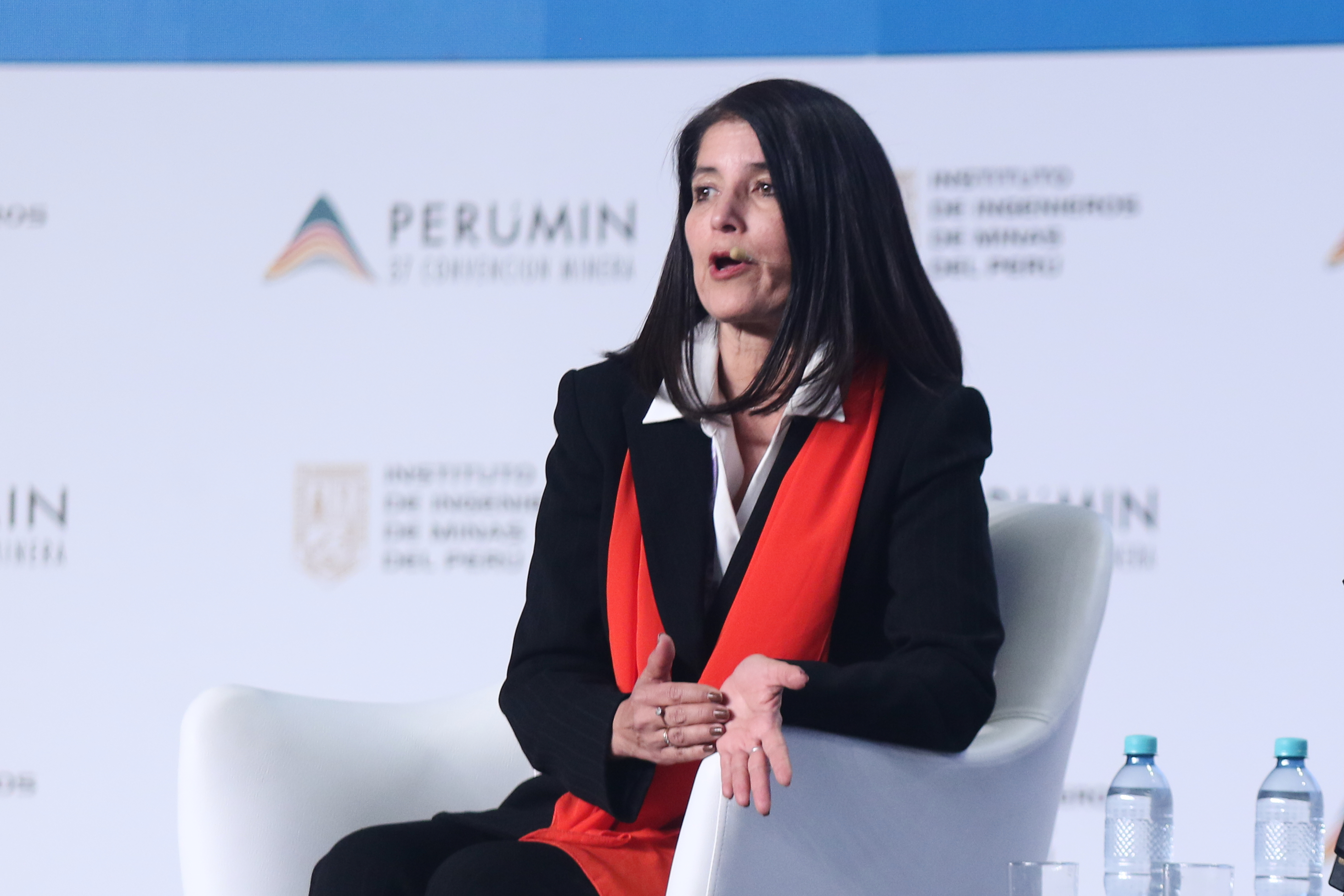
June 1, 2026 - Peru must accelerate the development of mining projects, streamline permitting processes without lowering standards, and strengthen partnerships with neighboring countries to take advantage of the growing demand for critical minerals driven by the energy transition. This was highlighted by Julia Torreblanca, President of the National Society of Mining, Petroleum and Energy (SNMPE), in an interview with the Peruvian Institute of Mining Engineers (IIMP) ahead of the upcoming World Mining Congress (WMC) 2026.
Julia Torreblanca “We need to seize this window of opportunity, which we do not know how long it will last, so that the country can benefit not only by unlocking the value of its mineral resources, but also by generating jobs, tax revenues, and the entire supply chain that supports mining development in Peru,” she said. Torreblanca, who will participate in the World Mining Congress, warned that while global demand for strategic minerals continues to grow, countries such as Chile, Argentina, and Ecuador are advancing in their efforts to attract new investments. Therefore, she stressed the urgency of speeding up project evaluation and approval processes. “The opportunity we have is to simplify permitting, accelerate reviews and approvals when appropriate, or non-approval when warranted, without lowering standards, but within shorter timeframes so that we can also compete with other countries that are attracting investment,” she told IIMP. Greater regional integration Torreblanca emphasized that relations with neighboring countries should not be viewed solely through the lens of competition for capital, but also as an opportunity to build regional synergies that enable the sharing of knowledge, suppliers, and best practices. “There is an opportunity in these partnerships not only to create synergies, but also to learn best practices from one another and simplify permitting processes, undoubtedly helping unlock the value of the minerals the world needs today,” she stated. In this regard, she noted that Peru has the conditions to consolidate its position as a regional benchmark thanks to its geological potential and a well-established mining supply chain. “Peru’s expectation should be not only to position itself at the center of these partnerships, but also to share the experience it has gained over time and offer mining services, because we already have a strong logistics network and highly experienced contractors,” she said. A message to the world from Lima Torreblanca also highlighted the significance of Peru hosting the World Mining Congress 2026, which will return to the country after 52 years and bring together industry leaders, investors, academics, and experts from around the globe. “It is a very important milestone for the Peruvian mining industry because it brings together not only technical professionals from the sector, but also investors interested in learning firsthand about the challenges and opportunities our country has to offer,” she said. Torreblanca will participate in the panel “Existing and Emerging Risks That May Disrupt the Value Chain,” alongside Jorge Gómez, CEO of Compañía Minera Doña Inés de Collahuasi; Luis Miguel Castilla, Executive Director of Videnza Institute; and Henry Van, Head of Industrial Metal Analysis at Trafigura. The World Mining Congress 2026 will take place from June 24 to 26 in Lima under the theme “Mining for the Future: Trust, Transformation, Technology.” For more information on the conference program and registration, visit wmc2026.org. |





|