
 






|
Signature Sponsor


July 13, 2026 - Coal is the fuel the modern world keeps trying to break up with and never quite does. It is shiny, black or brownish-black, and it hides in underground layers called seams that can run 90 feet thick and stretch for hundreds of miles. When you burn it, it gives off more heat for longer than wood, which is exactly why humanity spent a few centuries setting it on fire with enthusiasm. The results, for better and worse, built the world we live in.
People figured this out a long time ago. The Romans heated their public baths with it, the Aztecs burned it for fuel and carved the glossy kind, jet, into ornaments, and Bronze Age communities in southern Wales used it to cremate their dead. The Chinese got there first in a serious way: a study in Science Advances traces systematic coal mining in northwestern China back roughly 3,600 years, to around 1600 BC. Everyone else was still mostly burning sticks.
The real turning point came during the Industrial Revolution, and it is worth setting the record straight on how. James Watt did not invent the steam engine, whatever the plaques say. Thomas Newcomen built the first practical one in 1712, a contraption so wasteful that critics joked it took an iron mine to build and a coal mine to keep running. What Watt did, in 1765, was bolt on a separate condenser that slashed the fuel waste and made steam power genuinely worth it. Coal fed the boilers, the boilers made the steam, and the steam remade the planet. By 1900, roughly half the world's energy came from the black rock.
We are supposedly moving on, and yet coal still generates about a third of the world's electricity, with natural gas trailing behind. China burns more than half of all the coal used on Earth, single-handedly. The United States sits on the largest reserves, about a quarter of the known global total. So the habit is far from kicked. These are the ten largest coal mines in the world, ranked by how much they dug up in 2023, and the geography of that list tells its own story.
1. Black Thunder Mine, United States
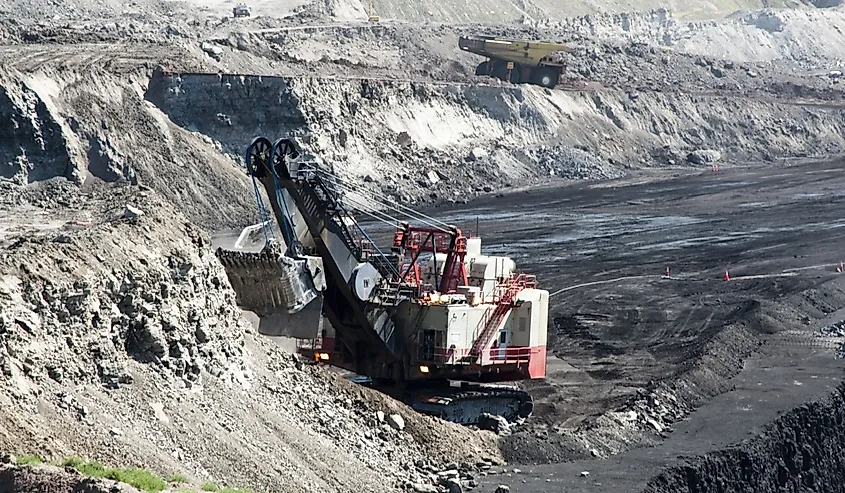 The reigning champion sits in Wyoming's Powder River Basin, about 54 miles south of Gillette, and it is not close. Black Thunder, owned by Arch Resources of St. Louis, moved an estimated 62.68 million tons of coal in 2023, the most of any mine on the planet. It runs on a fleet of draglines, including a monster named Ursa Major that ranks among the largest ever built, and at its peak it loads more than 20 coal trains a day. Opened in 1977, it hit a milestone in 2004 as the first US mine to ship a cumulative billion short tons. The coal here is low-sulfur, sub-bituminous, the kind power stations like because it needs little more than a good crushing before it burns.
2. Gevra OC Mine, India
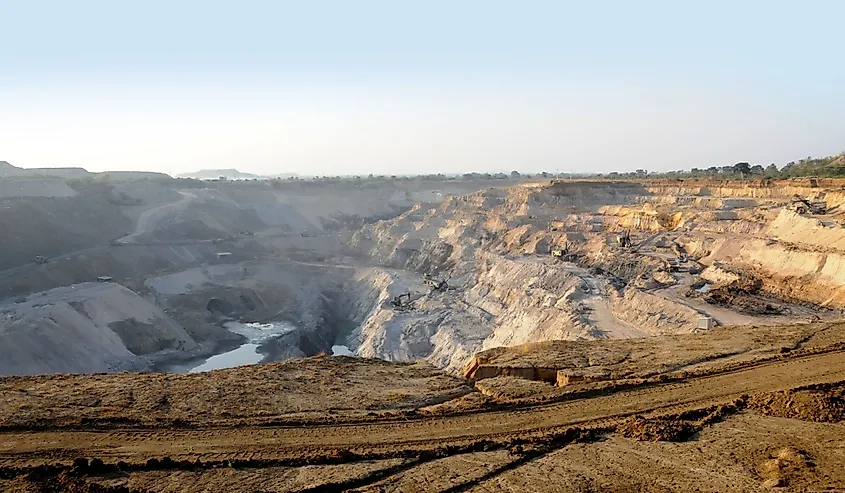 India's giant is Gevra, in the Korba district of Chhattisgarh, run by South Eastern Coalfields, an arm of the state-owned Coal India. It produced an estimated 60 million tonnes in 2023, a whisker behind Black Thunder, and it is gunning for the top spot: in 2024 it won environmental clearance to push capacity to 70 million tonnes a year. Opened in 1981 and stretching more than six miles end to end, Gevra digs bituminous coal, the medium-grade, high-heat workhorse of the coal world. Barring a change of plans, it is expected to keep going until 2036.
3. North Antelope Rochelle Mine, United States
Back to Wyoming, and to a technicality worth savoring. North Antelope Rochelle, about 65 miles south of Gillette and owned by Peabody Energy, produced an estimated 56.25 million tons in 2023, good for third by output. But by reserves, it is the biggest coal mine on Earth, essentially a bank vault of unmined coal. It is really two surface mines stitched together, North Antelope (opened 1983) and Rochelle (1985), and it is slated to run until 2047. Its coal is sub-bituminous with sulfur content as low as 0.2 percent, about the cleanest-burning coal the country produces.
4. Kusmunda OC Mine, India
India's second entry sits in the same coal-rich Korba region of Chhattisgarh, again under South Eastern Coalfields. Kusmunda produced an estimated 50 million tons in 2023, making it India's second-largest mine and confirming Korba as one of the busiest coal districts on the planet. Opened in 1979, it works the same abundant bituminous coal as its neighbor Gevra and is likewise expected to operate until 2036. Two of the world's five largest coal mines, remarkably, sit within one Indian district.
5. Northern Shaanxi Mine, China
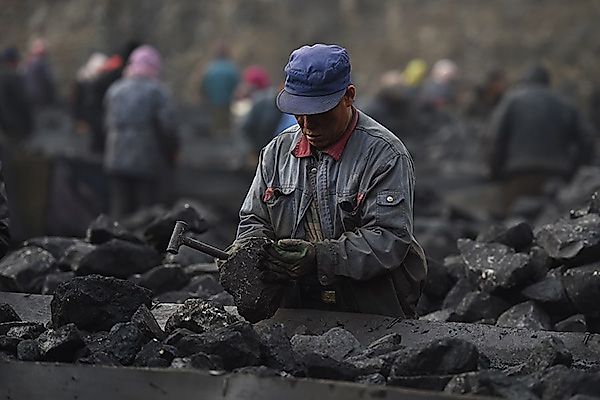 For the country that burns half the world's coal, China places only one mine on this list, which says less about China and more about how it spreads production across an enormous number of sites. Northern Shaanxi, in the inland northwestern province about 485 miles west of Beijing, is the nation's largest, owned by the Shaanxi Coal and Chemical Industry Group out of Xi'an. It produced an estimated 41.34 million tons in 2023. China's reserves skew heavily toward anthracite and bituminous coal, which together make up around 94 percent of the national total, so its mines tend to yield the higher-grade stuff.
6. Sangatta Mine, Indonesia
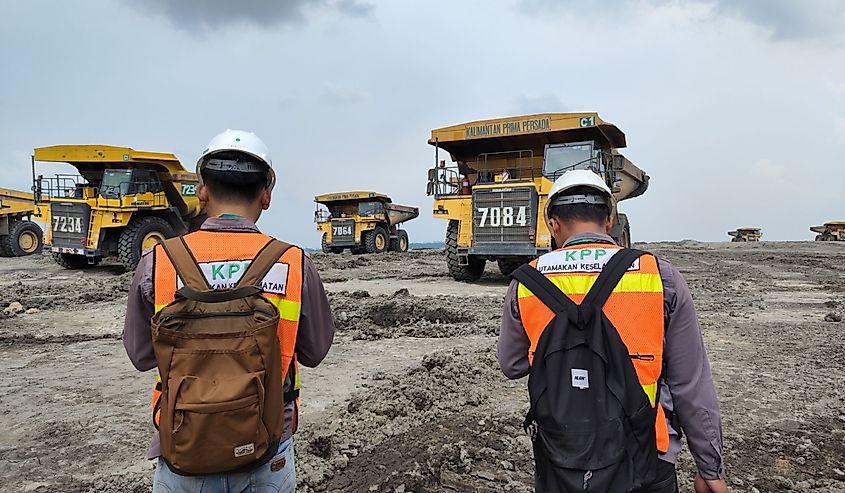 Now begins the Indonesian takeover. Sangatta, in East Kalimantan on the island of Borneo, is the sixth-largest surface mine in the world and the first of four Indonesian entries in a row. Owned by Jakarta-based Bumi Resources, it produced 40.9 million tons in 2023 across three deposit areas with the excellent names Prima Pinang, Melawan, and Pinang North. Exploration here started in 1987, and the first commercial exports left in 1992. Most of what it digs is sub-bituminous coal, split between local power and the export market.
7. Belchatow Mine, Poland
8. FTB Project, Indonesia
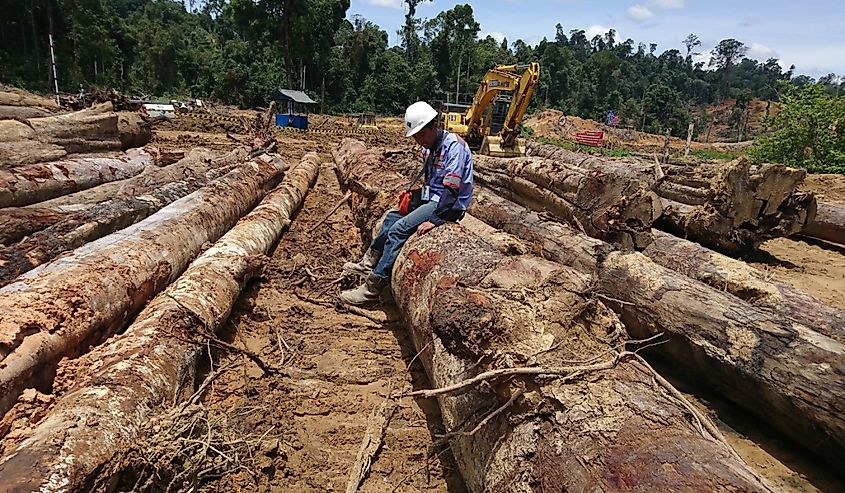
Back to Borneo. The FTB Project, another East Kalimantan surface mine, is owned by Bayan Resources, the company behind Indonesian billionaire Low Tuck Kwong. It produced an estimated 37.4 million tons in 2023 and has a long runway ahead, with operations expected to continue until 2055. Its coal ranges from high-energy bituminous to low-sulfur, low-ash sub-bituminous, which is exactly the kind that buyers overseas pay up for. Indonesia, worth noting, is the world's largest exporter of coal for electricity, and mines like this are why.
9. Tutupan Mine, Indonesia
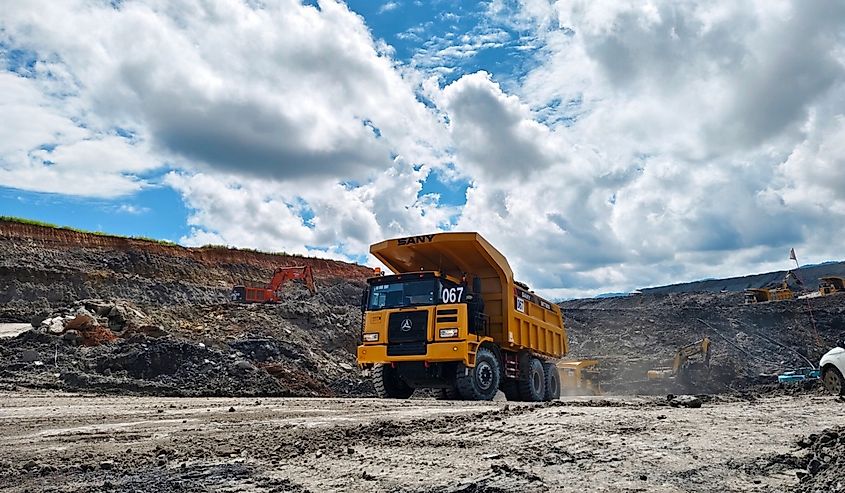 South Kalimantan takes over for the last two. Tutupan, owned by Adaro Energy, produced an estimated 36.39 million tons in 2023. Its coal is sold under the brand name Envirocoal, a moderate-energy sub-bituminous coal marketed on its unusually low sulfur and ash content. Selling coal on its green credentials is a neat trick, and a sign of exactly which way the wind is blowing for the industry.
10. Borneo Indobara Mine, Indonesia
Rounding out the list is Borneo Indobara, also in South Kalimantan, owned by Dian Swastatika Sentosa, a conglomerate with fingers in mining, power, technology, and chemicals. It produced an estimated 35.03 million tons in 2023 and is expected to operate until 2036, pulling lignite and sub-bituminous coal from the Warukin formation that underlies much of the region. That makes four Indonesian mines in the bottom half of this list, a clear signal of how fast the country has muscled its way into the top ranks of global coal.
What the List Tells Us
Add it up and the map is lopsided in a telling way: China and Poland have one mine each, the US and India have two apiece, and Indonesia claims four. Coal's share of the power mix has barely budged in two decades, hovering in the mid-30s percent since 2000, even as everyone insists the transition is coming. Experts still expect renewables to supply about half of primary energy by 2050, and when that shift finally bites, these ten mines are exactly the operations it will reshape.
None of this is free. Burning coal releases sulfur dioxide, nitrogen oxides, and fine particulates linked to acid rain and respiratory disease, which is why so many countries are pushing hard toward cleaner sources. But walking away is genuinely difficult, tangled up with lost jobs, thin political will, and steep upfront costs. As long as coal remains a leading source of power, the mines on this list will keep running, and keep mattering, environmental toll and all.
|






|