|
Signature Sponsor

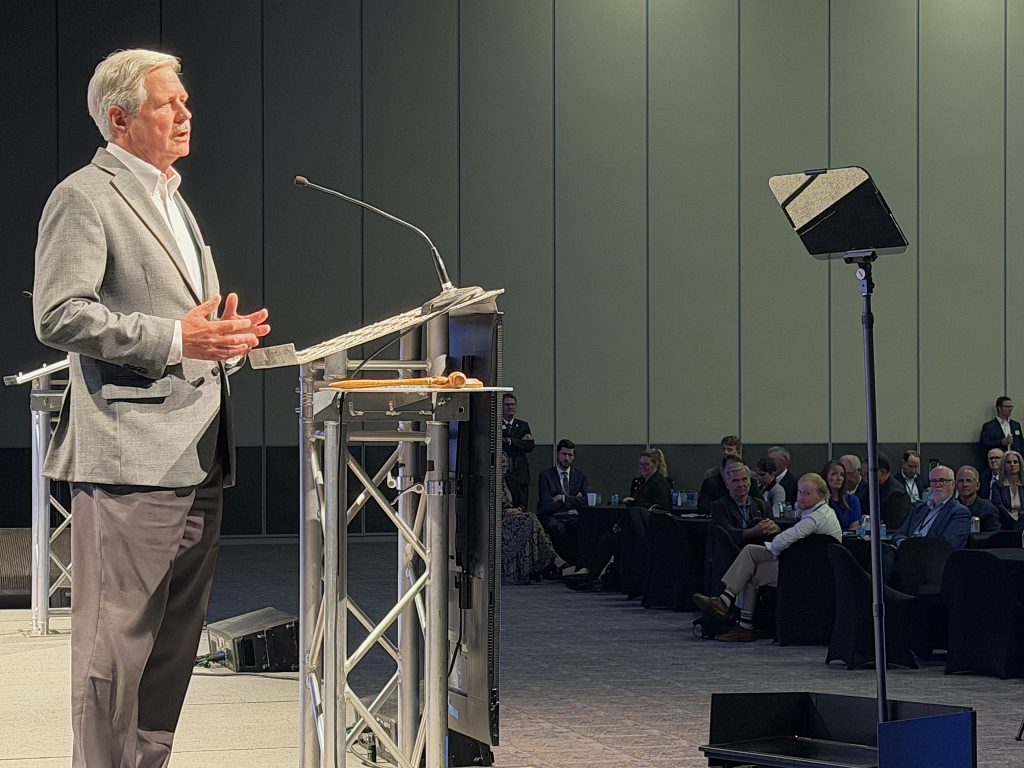
August 13, 2026 - At the Basin Electric Power Cooperative’s annual meeting yesterday, Senator John Hoeven discussed the important role that reliable, coal-fired baseload power plays in making the U.S. energy secure and outlined his efforts to ensure the future of this critical industry.
“Demand for electricity is up, and it’s going to keep increasing. We need baseload power sources like coal to maintain the reliability and affordability of the grid now and into the future. That’s an essential part of making the U.S. energy dominant, and it’s exactly what Crack the Code 2.0 will help accomplish,” said Hoeven. “By partnering our coal and oil industries and using CO2 for enhanced oil recovery, we are creating an additional revenue stream to help keep our coal-fired power plants online. We’ve now secured a total of $157 million for the initiative’s first phase, which will develop large-scale pilot projects to prove that it works and is commercially viable. At the same time, we’ve worked closely with the Trump administration to reduce the regulatory burden for our energy producers, including our coal industry. By rolling back unworkable Biden-era mandates, we are bringing down the cost of energy and ensuring we can make the best use of our abundant energy resources.”
Hoeven’s efforts on Crack the Code 2.0 complement the regulatory relief that he has worked to provide for coal producers. In particular, Hoeven advanced efforts to roll back the following burdensome, overreaching Biden-era regulations: The Mercury and Air Toxics Standards (MATS) Regulations Hoeven, along with then-Congressman Kelly Armstrong, previously led bicameral legislation to block the EPA from implementing its new MATS rule. When first advanced in 2012 by the Obama administration, this rule contributed to the closure of numerous power plants before being blocked by the Supreme Court in 2015. The Biden administration then revived the MATS rule utilizing the same unreasonable cost justification that was rejected by the Supreme Court. The regulations would have replaced the existing cost-effective standards, which have already been found to protect human health and safety. Hoeven worked with the Trump administration to issue a rule, which was finalized earlier this year, rescinding the Biden-era MATS regulations. The Public Lands Rule The Public Lands Rule would have overhauled the management of more than 245 million acres of taxpayer-owned lands and establish “conservation leases” to lock away federal lands and minerals. Hoeven previously led his colleagues in pushing for the Bureau of Land Management (BLM) to withdraw the rule when it was proposed in 2023 and introduced legislation with Senator John Barrasso (R-Wyo.) to block its implementation. Last year, the Trump administration released a proposal to rescind the Public Lands Rule. The Resource Management Plan (RMP) for North Dakota The RMP for North Dakota would have closed off leasing to 45 percent of potential federal oil and gas acreage and nearly 99 percent of federal coal acreage in the state. Accordingly, Hoeven, along with the North Dakota delegation, introduced and worked to pass a Congressional Review Act (CRA) resolution of disapproval to rescind the RMP and help ensure access to taxpayer-owned energy resources in North Dakota. |









|