







|
Signature Sponsor


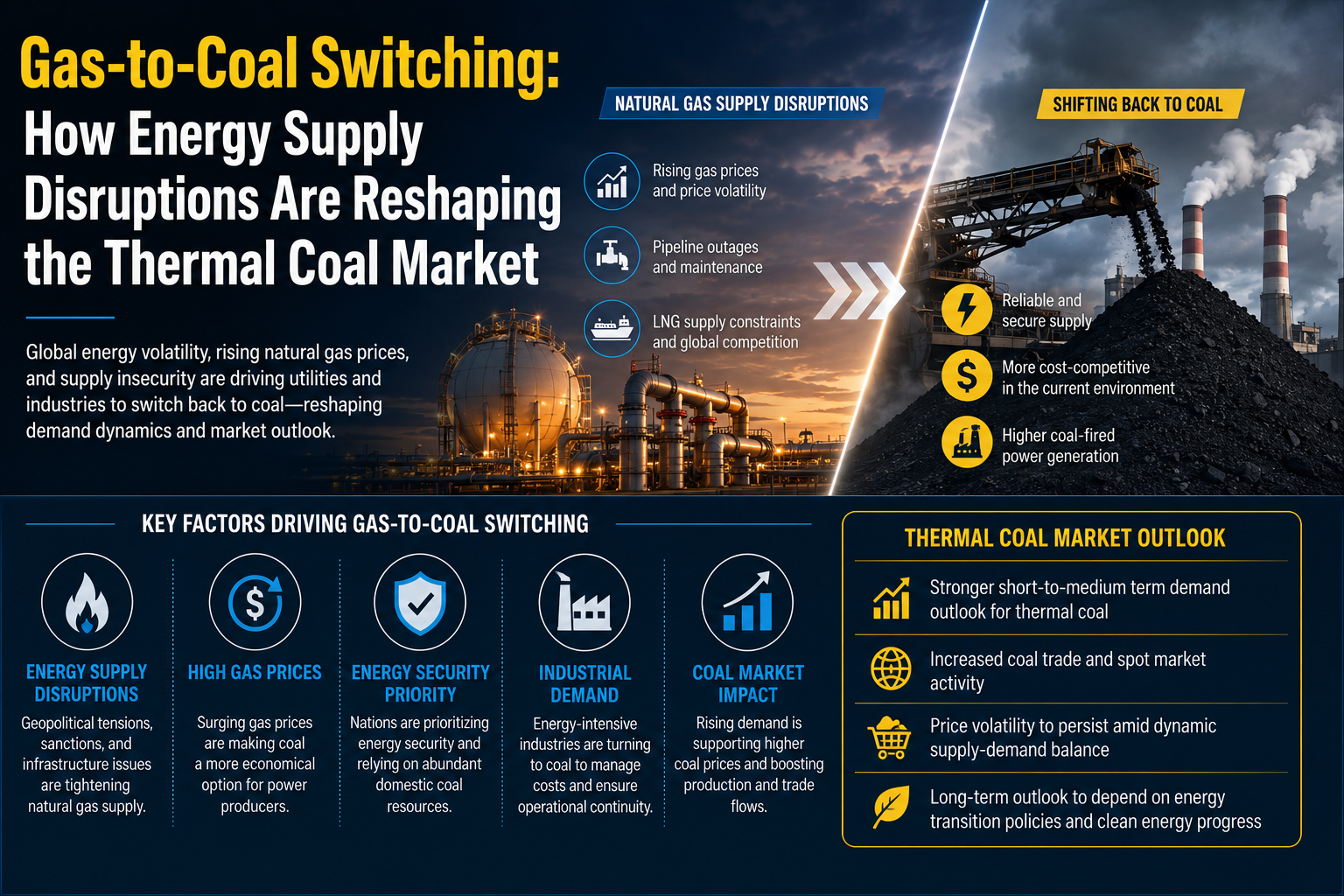
August 28, 2026 - The global energy market is experiencing another shift in fuel economics as disruptions to natural gas and liquefied natural gas (LNG) supplies increase pressure on power generators. Higher gas prices and tighter LNG availability are encouraging utilities with flexible generation fleets to reassess their fuel mix, creating renewed support for thermal coal.
Recent developments in the LNG market have become an important catalyst for the thermal-coal market, as supply disruptions and elevated gas prices are encouraging utilities to reassess their fuel mix. U.S. LNG exports increased 23% year over year during the first seven months of 2026, while competition for replacement cargoes has kept Asian gas prices elevated. QatarEnergy also purchased 33 U.S. LNG cargoes during 2026 to compensate for disrupted supplies, highlighting the tightness in global LNG markets. The impact is increasingly visible in coal markets. Asian seaborne thermal-coal imports reached approximately 75.5 million tonnes in July 2026, up 2.4% year over year and 3.6% from June, with China, Japan and South Korea among the major contributors. Higher LNG prices are improving the relative economics of coal-fired generation, encouraging utilities with available coal capacity to increase coal consumption. At the same time, weaker demand in some markets and improving coal supply are limiting the extent of price increases. The result is a gas-to-coal substitution wave, creating short-term support for thermal-coal demand and increasing volatility across global energy markets.
Cause of this price disruption
Recent movements in the price of thermal coal are closely associated with the disruption of Qatar’s LNG exports in connection with the Middle East crisis. In the wake of attacks on the LNG facilities in Qatar’s Ras Laffan complex, which resulted in damage to two LNG trains and a reduction of Qatar’s export capacity by 17%, and with further disruption caused by the situation in the Strait of Hormuz, LNG exports faced additional risks. Qatar accounts for about one fifth of global LNG, hence the importance of the disruption for the gas-dependent economies in Asia and Europe. The subsequent tightness in the LNG market and rising gas prices have led to changes in power generation economics. Firms unable to obtain enough LNG or facing rising costs of gas-fired power generation found it more attractive to use existing coal-based capacities for electricity production. Therefore, the key market chain is
Qatar LNG disruption → tighter gas supply → higher LNG prices → greater coal competitiveness → increased thermal-coal demand and price support.
How is this news relevant to the thermal coal market?
The linkage is significant in energy pricing and the profitability of utilities as well. If the price of natural gas goes up, power plants will be incentivised to produce electricity using more coal-based energy, which is widely used in Asia to produce electricity. This might increase the demand for thermal coal, which, in turn, will help in fixing the benchmark prices of coal. However, the falling prices of natural gas or higher availability of LNG will increase the competitiveness of natural gas and decrease coal usage.
Recent Market Stats
The Gas-to-Coal Substitution Effect
The natural gas and thermal coal markets are closely connected because both fuels compete to generate electricity. When the price or availability of one fuel changes, power producers can adjust their fuel mix, affecting demand and prices for the other.
How the relationship works
When natural gas/LNG prices increase because of supply disruptions or shortages, gas-fired power generation becomes more expensive. Utilities that have available coal plants may increase coal generation, boosting thermal-coal demand.
When LNG supplies increase and gas prices fall, gas-fired power plants can become more competitive. Utilities may reduce coal generation, putting downward pressure on thermal-coal demand.
During periods of high electricity demand-such as extreme summer heat-utilities need more generation. If gas supplies are constrained, coal can fill part of the gap, increasing coal imports and prices.
The relationship depends on power-plant efficiency, coal quality, fuel transportation costs, emissions regulations, carbon prices and whether utilities have both coal and gas capacity available.
Simple market mechanism
Gas/LNG supply shortage
Regional Responses Are Reshaping the Energy Mix Throughout the East Asian region, coal-based power production has been found to be relatively robust despite low seasonal electricity demand, with increased LNG prices favouring coal utilisation. In Taiwan, the reopening of the 2.1-GW Hsinta coal-based power plant may lead to higher demand for coal, estimated at about 5.5 million tonnes per year. South Korea has started reconsidering its fuel procurement plan, which now includes Russian coal, while Japan is to use nuclear power generation. For instance, the restart of units such as Kashiwazaki-Kariwa Unit 6 will support Japan in mitigating its reliance on expensive LNG and keep further coal demand down.
In China, the negative impact of high gas prices is minimal since gas only contributes around 3% to electricity generation. The country, therefore, continues to depend largely on domestic coal to meet its power needs. In India, fuel switching has been more pronounced, with increased LNG and pet-coke prices leading to increased use of coal by some industrial players. This makes coal crucial for India's energy security plan. In Europe, countries such as Italy are revisiting their coal-based power generation as uncertainties prevail in the gas market. As a major trading hub for coal, the ARA hub is highly sensitive to international fuel price movements.
Who Benefits from the Substitution Wave?
The changing fuel economics create different outcomes across the energy industry.
Coal producers can benefit from stronger demand and higher benchmark prices. Producers of high-quality thermal coal are particularly well positioned because their products can compete more effectively against expensive gas in power generation.
Australia and Indonesia remain critical to the Asian seaborne market. Higher demand from Japan, South Korea, China and India can increase export opportunities, although shipping availability and freight rates influence final delivered costs.
Mining companies with low-cost operations can potentially expand margins when international coal prices rise. However, they must also consider capital discipline because the long-term outlook for thermal coal remains uncertain.
Utilities are more exposed to higher fuel costs. Even if coal is cheaper than gas, elevated coal prices can increase electricity-generation expenses and place pressure on power tariffs.
LNG producers can benefit from higher gas prices in the short term. However, persistently expensive LNG can encourage consumers to switch to coal or accelerate investments in alternative energy.
What Happens If Gas Prices Remain High?
The future direction of the thermal-coal market depends heavily on how long gas-market tightness persists.
Scenario 1: Gas Supply Remains Tight
If LNG supply disruptions continue, gas prices could remain elevated. Utilities with available coal capacity may increase coal generation, strengthening demand for thermal coal. This scenario would support seaborne coal exporters and could keep high-quality coal prices elevated.
Scenario 2: LNG Supply Normalises
If additional LNG supply becomes available and global inventories recover, gas prices could decline. In that situation, some utilities could shift generation back toward gas, reducing incremental coal demand. This scenario would weaken the current substitution effect and place downward pressure on thermal-coal prices. The distinction between these two scenarios makes LNG supply growth one of the most important variables to monitor for coal-market investors and producers.
Impact on Investment and Investors
The gas/LNG disruption will be a short-term investment opportunity in thermal coal due to the rising cost of gas leading to more coal-fuelled production by utilities. This can result in better prices for thermal coal, export volumes and margins of efficient producers, especially those in Australia and Indonesia. Moreover, the energy disruption is expected to result in an additional 150 million tonnes of APAC consumption of thermal coal up to 2030, with about half of it coming in 2026. Nevertheless, it is prudent to consider this an investment tactic and not a comeback for coal because improved LNG supply, renewables expansion and retirements of coal power plants may eventually reduce demand. The investment signals in this case will be the price of coal, LNG, Asian imports and producer margins.
Top 5 Beneficiary Countries from the Thermal-Coal Price Disruption
Australia is well positioned as LNG shortages increase demand for thermal coal in Asia. The Australian government expects thermal-coal prices to remain elevated through H2 2026, with exports forecast at around 209 million tonnes in 2025, although volumes are expected to gradually decline. Thermal-coal export earnings are estimated at A$30 billion in 2025–26.
Indonesia benefits from stronger Asian demand because of its large thermal-coal export base and competitive supply. Higher international prices can increase export revenues and mining-sector margins as utilities seek alternatives to expensive LNG. Its importance is particularly strong across China, India and Southeast Asia, where Indonesian coal remains a major source of imported power-generation fuel.
The U.S. stands to gain the most from exporting LNG as tight global gas markets raise the demand for new suppliers. U.S. LNG exports stood at 15.0 Bcf/d in 2025, and EIA projects 17.0 Bcf/d in 2026. Coal exports from the country were also recorded at 23.7 million short tons in Q1 2026, out of which steam coal was 10.4 million short tons.
South Africa can make gains through high prices of thermal coal in international markets as buyers from Asia and elsewhere look for alternative sources of energy during market disruptions of LNG markets. The key benefit for South Africa is due to its existing industry of exporting thermal coal and having access to international markets.
Although Russia might potentially benefit from higher prices for thermal coal through increased export income, it does not seem that Russia can do much about it. Western sanctions, logistical issues and reduced profitability are among the main obstacles for Russian thermal-coal exports. Thus, Russia should be considered as a potential beneficiary rather than a clear winner.
Conclusion
The recent shortage of LNG shipments has underscored the close connection that exists between the market for natural gas and the market for thermal coal. Higher gas prices are pushing up the economic case for coal-fired generation in some Asian countries, which is supporting both coal prices and coal producers. But the current support is not expected to signal a permanent turnaround in the outlook for thermal coal. Growing LNG supplies, rapid growth in renewables and the eventual decommissioning of coal-fired power plants could reduce demand in the longer run. In general, the current situation presents thermal coal with a temporary competitive edge amid high gas prices, but the sustainability of this edge would hinge on a number of factors, including the return to normal LNG shipments, electricity demand, coal supplies and the shift away from fossil fuels. |









|