







|
Signature Sponsor


October 27, 2026 - While the Kemmerer coal mine has announced an anticipated closure date at the end of 2029, local and county leaders are hoping it’s not a done deal quite yet.
Kemmerer Mayor Robert Bowen told Cowboy State Daily that the mine still has contracts to finish and a lot can change in two years.
“We could have a Hail Mary right at the end, and something will happen to bring it all back,” Bowen said. “We’ve still got lots of good coal out there.”
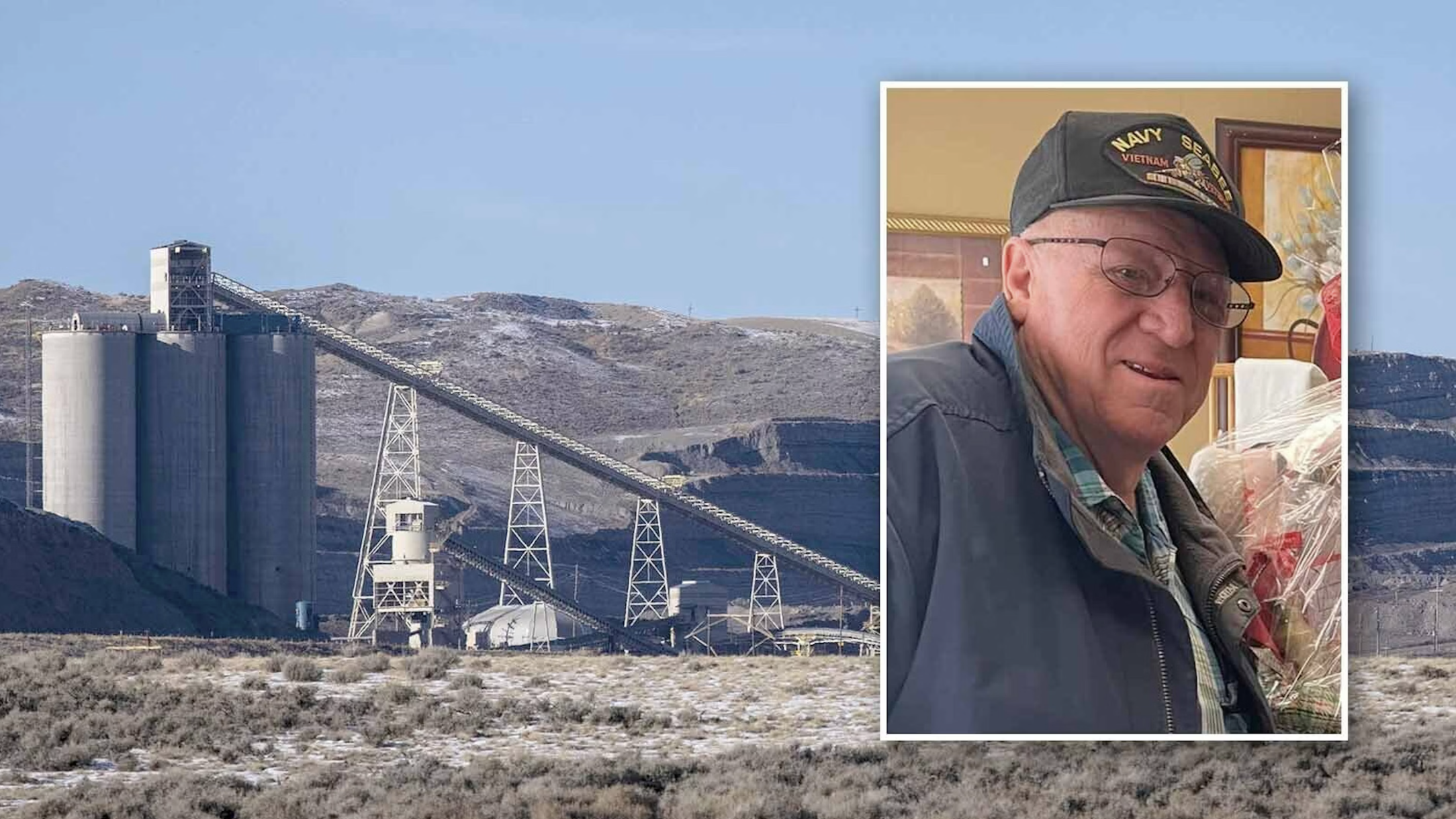
For Dick Borino, who retired from the mine in 1995 after a 22-year career there, the potential loss of the mine and its heritage is personal.
Retired Kemmerer miner Dick Borino described the town's coal mine as "one of the better places to work." Dick Borino; Getty Images
“It was one of the better places to work,” Borino told Cowboy State Daily. “Back when I first hired on there in 1973, there wasn’t a lot of jobs around. So if you could get a job out there, you were doing really well because they paid more than most.”
‘Find Other Industries’
The Kemmerer coal mine traces its roots to the Kemmerer Coal Co., founded in 1897, and has operated as an open-pit mine since 1950. In recent years it has changed owners several times.
The mine’s previous owner, Colorado-based Westmoreland Coal Co., filed for bankruptcy in 2018, and the mine has since changed hands again, most recently when it was sold to a Southern California real estate investment company.
Even with a closure date announced, Bowen emphasized that the mine still has life. Roughly 9 million tons sit on the other side of U.S. Highway 30, on land the mine already leases. Reaching it would require moving the highway at a cost of $30 million, half of which came from the Legislature.
But the mine’s owner halted the project to move U.S. Highway 30 in 2024, citing declining demand, leaving it on the state’s shelf until funding and coal sales return.
“The owners of the mine might not want to invest that money right now,” Bowen said.
Although production at the mine has fallen 44% from its 2015 high of 4.5 million tons, Bowen emphasized that coal has other uses beyond fueling power plants. In 2024, investors announced plans to make skincare products from Kemmerer coal at a site near the mine.
“There’s so many other uses for coal besides burning it,” Bowen said. “I’d love to see somebody take that mine on and find other industries that would be willing to come on as customers.”
‘The Nudge We Need’
Whatever happens next, Bowen said the announced closure might be a good catalyst for change.
“This could be the kind of nudge we need to start broadening our horizons economically and diversifying,” Bowen said. “We’ve relied too heavily on one industry for too long. Now, the potential is there we’re going to see what happens when one thing goes under.”
As the most populated place in Lincoln County, Kemmerer receives the largest share of the mine’s tax revenue, Bowen said. If that money disappears, he said the town and the county mightneed to brace for a hit.
“At some point we might have to decide if we want to plow our roads or pave our roads,” Bowen said. “If enough funding is cut, we’re going to have to decide what’s priority, because we’re not going to be able to have both.”
Public amenities could feel the squeeze too. Bowen said the local event center, a community gathering space, is heavily subsidized by tax dollars. It and the city’s other recreation services could be among the first things the city has to take a hard look at, he said.
Bowen said the impact assistance funds Kemmerer is receiving from the nearby Natrium nuclear project are helping cushion the city’s budget for now, but he knows that money will dry up once construction ends.
“Right now, we’re lucky that we’ve got the impact funding,” Bowen said.“But that money is a short-term thing, so we need to be definitely looking long-term.”
‘My Children Couldn’t Stay’
For Kent Connelly, chair of the Lincoln County Board of Commissioners, the potential loss of the mine is just another hit to the county’s economy.
“I’m in a recession here in Lincoln County right now,” Connelly told Cowboy State Daily. “My budget has gone down $4 million in the last two years.”
Connelly said the hit comes largely from the loss of coal tax revenue as the neighboring Naughton power plant has moved from coal to natural gas, and the mine’s closure would deepen that.
“If they do go down that’ll be about $2 million lost in southwest Wyoming,” Connelly said.
Like Bowen, Connelly said the story might not be over for the Kemmerer mine. It still has contracts to finish, he said, and things could change before 2029.
But even if the mine does close, Connelly said it wouldn’t hit the local workforce as hard as it once would have. He said the mine employed 345 people five years ago, but that number has dropped to 144.
“Unfortunately 45% of them commute from other places,” Connelly said. "It’s never generated enough tax revenue to build homes.”
Connelly said the economic fallout reaches beyond government budgets and into local households, including his own. For families in a county where good jobs are already scarce, losing another major employer would only make that harder.
“We want our children to be here,” Connelly said. “All three of my children couldn’t stay here. They all found jobs in Utah. There’s about 25 people on my block the same way.”
Beyond the economics, Bowen said the closure would also mean losing a piece of the local heritage.
“It is a big deal for us,” Bowen said. “It’s one of the things our community has been known for since its founding.”
‘The Last Skeleton Crew’
Borino said his career at the mine came with its own turbulence.
Early in his career, miners could buy stoker coal at a discount to heat their homes, Borino said, but by the end it had become hard to get. Much of the coal sent to the neighboring power plant was also poor quality, he said, with the better coal going to industrial customers.
“A lot of it, I think, was black dirt,” Borino said. “It wasn’t good coal for the power plant to burn. So that might be part of the reason why they went to natural gas.”
Borino said losing that customer when the plant began switching to natural gas in 2020 made the mine’s closing less of a shock. During his years there, he said, nearly all the coal hauled out of the mine went to the power plant.
For Borino, his career at the mine was a launching pad to his career as a professor, teaching diesel mechanics at Great Basin College in Nevada. But with the mine in decline for years, Borino said he doesn’t think it has offered that same opportunity to others, especially in recent years.
When the mine does close, Borino said, he doesn’t expect it to matter much to Kemmerer.
“Just the last skeleton crew will be gone,” Borino said. |








|