





|
Signature Sponsor


October 28, 2026 - To grow the economy and support national security, West Virginia University will use a $1 million Providing Opportunities for Specialized Education in Critical Technologies Planning Prize from the U.S. Department of Energy to expand existing mining engineering and critical minerals programs.
“The future of American energy and critical minerals depends on the talent we develop today and WVU is well positioned to lead the way,” WVU President Michael T. Benson said.
“With support from the PROSPECT Planning Prize, WVU stands ready to educate the next generation of engineers, scientists, and industry leaders who will be essential to America’s energy and mineral development.”
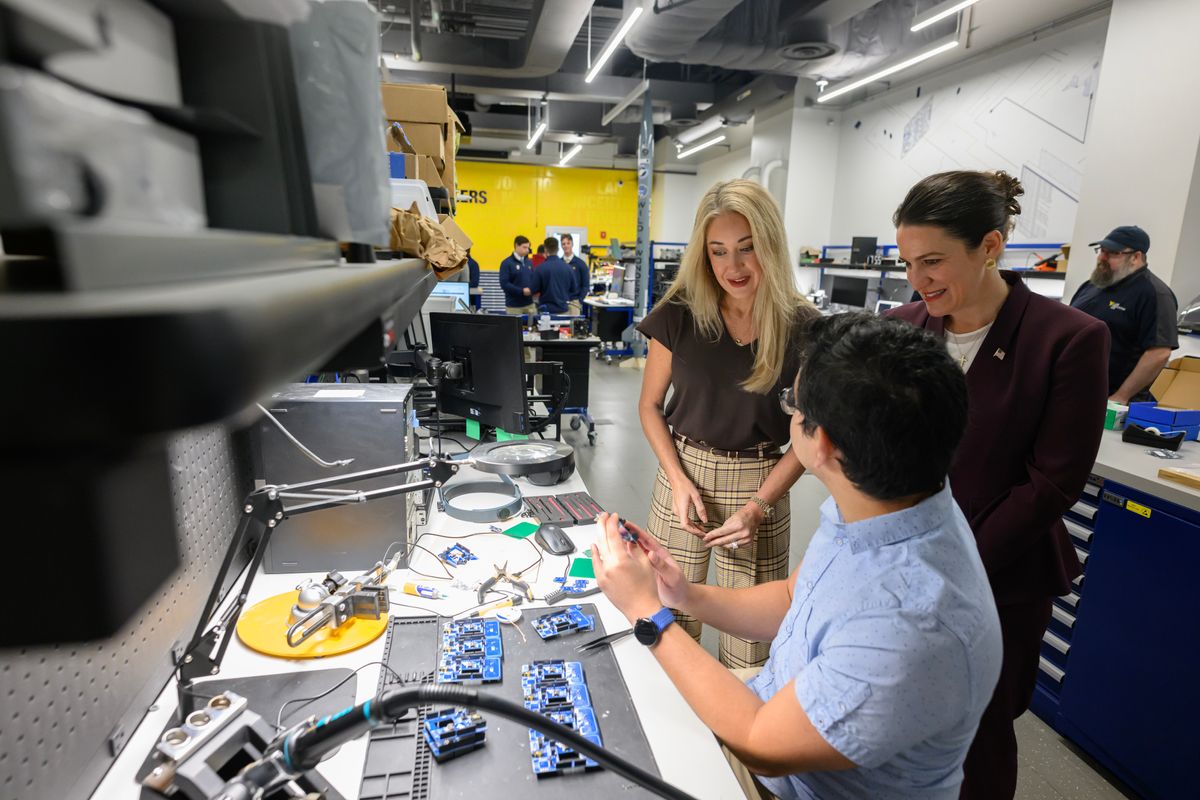
The U.S. Department of Energy has selected WVU for a $1 million PROSPECT Planning Prize to expand educational opportunities in mining engineering and critical minerals on campus. Photo: WVU Photo/Brian Persinger
The $1 million cash award will fund efforts to prepare students to produce, process, recover, and recycle critical minerals domestically, while expanding educational opportunities through collaborations with K-12 schools, community and technical colleges, industry partners, workforce development organizations, professional associations, DOE national labs, and government agencies.
“We are already developing the talent, technologies, and solutions needed to help secure America’s energy future and strengthen our nation’s critical mineral supply chains, and this award will help us do more,” WVU Provost and Vice President for Academic Affairs Beverly Wendland said.
“From our nationally recognized research in critical minerals and rare earth elements to our recently awarded $160 million NSF Engines award focused on resilient energy technology and infrastructure, WVU is driving innovation that strengthens domestic energy security, enhances grid reliability, and supports economic growth.”
Earlier this year, Wendland and mining engineering students from the WVU Benjamin M. Statler College of Engineering and Mineral Resources joined a White House discussion about ways to help the nation address critical shortages in the mining and critical minerals workforce.
U.S. Assistant Secretary of Energy Audrey Robertson followed that discussion with a visit to the Morgantown Campus on Sept. 29.
“America has abundant natural resources, but we need the skilled workforce to turn those resources into economic drivers that will grow our economy and create new jobs,” said Assistant Secretary Robertson.
“For decades, we have allowed our mining and critical minerals workforce to decline and our domestic supply chains of critical minerals to weaken. PROSPECT is about reversing that trend by challenging universities to rapidly grow the number of graduates ready to build and sustain the American critical minerals supply chains, from mines to materials.”
The award highlights the many ways WVU is serving as a leader in energy innovation.
“For over 150 years, the mining engineering program at the Statler College has prepared experts in mineral extraction, processing, utilization, and distribution,” said Pedro Mago, Glen H. Hiner Dean of the WVU Statler College.
“With rapid advancements in technologies, such as energy, healthcare, automotive, and others, the demand for essential minerals to develop and support those technologies has increased significantly. Our program, one of only 14 ABET-accredited mining engineering programs in the United States, positions WVU among the leading universities specializing in educating and training the next generation of engineers to meet this demand.”
Prize money will be used to strengthen student recruitment and retention efforts, enhance hands-on learning opportunities, and expand the University’s capacity to educate and prepare mining and critical minerals professionals.
“This investment in the Department’s most critical needs will provide scholarships for current and prospective students while supporting the optimization of classrooms and labs, and implementation of augmented reality and traditional hands-on learning tools and resources for our students and faculty to be successful,” said Qingqing Huang, WVU Robert E. Murray Chair of the Department of Mining Engineering and associate professor.
“Our main focus is to give our students every advantage in and out of the classroom to become highly sought-after candidates for the U.S. mining and critical minerals workforce.”
Experiential learning is a key component.
“Applying my classroom concepts to hands-on experiences as a member of the Mine Rescue Team, and Society for Mining, Metallurgy and Exploration has been the most valuable aspect of my education,” Braden Kiesel, a mining engineering student from New London, Ohio, said.
“In Mine Rescue, I trained to save lives in simulated mine disaster scenarios and through SME, I learned mine planning, equipment selection, blast design, permitting, and industry software from industry professionals. This investment in the program will ensure future generations of mining engineers have access to the same life-changing experiences that have made such a difference in my education at WVU.”
The PROSPECT Planning Prize is funded by the U.S. Department of Energy Office of Critical Minerals and Energy Innovation. The prize is managed by the National Laboratory of the Rockies under the American-Made program.
Find more information about WVU Mining Engineering.
Find more information about the WVU Rare Earth Elements Initiative. |






|