
 









|
Signature Sponsor


November 2, 2026 - Komatsu Ltd. (TSE:6301) presented its business results for the three and six months ended September 30, 2026, on October 29, 2026, revealing a quarter marked by strong revenue growth but significant profitability challenges. Despite posting record second-quarter sales that exceeded analyst expectations, the Japanese construction and mining equipment maker saw its stock plunge 9.29% to ¥6,182 as investors focused on margin compression and an earnings miss. The presentation, led by President and CEO Takuya Imayoshi alongside CFO Hiroshi Hosotani, highlighted the divergent forces shaping Komatsu’s performance: robust demand in North America and Latin America, favorable currency tailwinds, and improved pricing were offset by elevated tariff costs, material inflation, and an unfavorable product mix.
Quarterly Performance Highlights
Komatsu’s second quarter demonstrated the company’s ability to drive top-line growth while grappling with bottom-line pressures. Net sales increased 13.6% year-over-year to ¥1,115.5 billion, representing a quarterly record and beating analyst forecasts by 5.23%. However, operating income declined 1.2% to ¥135.1 billion, with the operating income ratio contracting 1.8 percentage points to 12.1%.
The following table illustrates the company’s Q2 financial performance across key metrics:
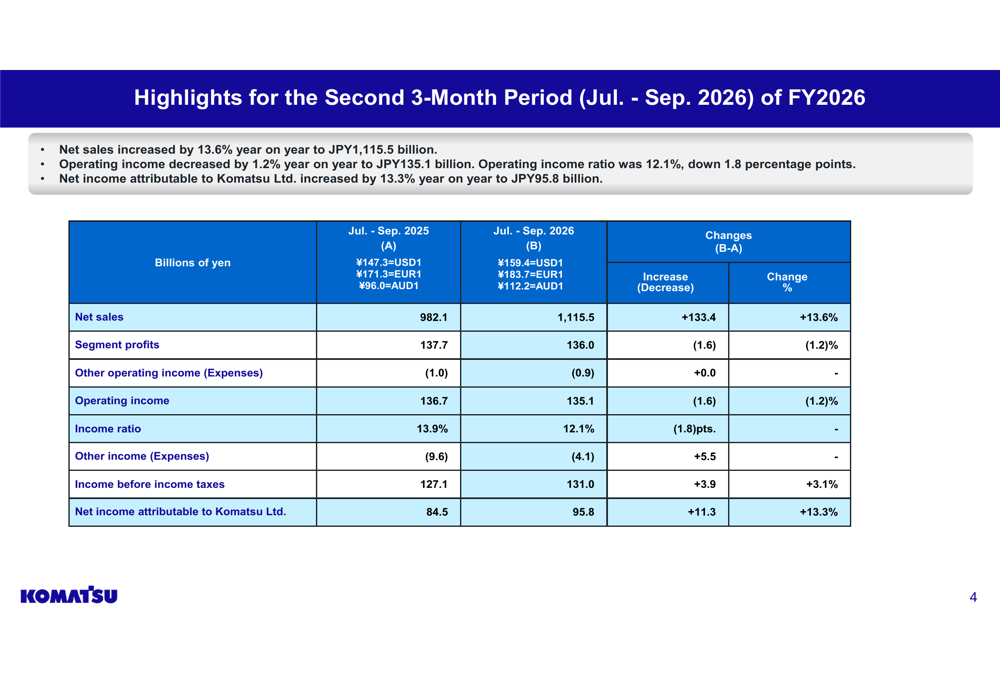 Net income attributable to Komatsu Ltd. rose 13.3% to ¥95.8 billion, but earnings per share of 107.86 yen fell short of the 113.75 yen forecast by 5.18%. This disconnect between revenue strength and earnings weakness proved central to the market’s negative reaction.
Exchange rate movements played a significant role in the quarter’s results, with the yen averaging ¥159.4 per dollar, ¥183.7 per euro, and ¥112.2 per Australian dollar—substantially weaker than the prior year and providing a considerable tailwind to yen-denominated sales.
In this article
Segment Analysis
The company’s three business segments delivered mixed results, with divergent trends in sales growth and profitability. The Construction, Mining & Utility Equipment segment, which accounts for the vast majority of Komatsu’s business, saw sales increase 15.1% year-over-year to ¥1,032.6 billion but experienced a 4.5% decline in segment profit to ¥114.3 billion.
As shown in the detailed segment breakdown below, this performance reflected the impact of rising costs outweighing the benefits of currency, volume, and pricing improvements:
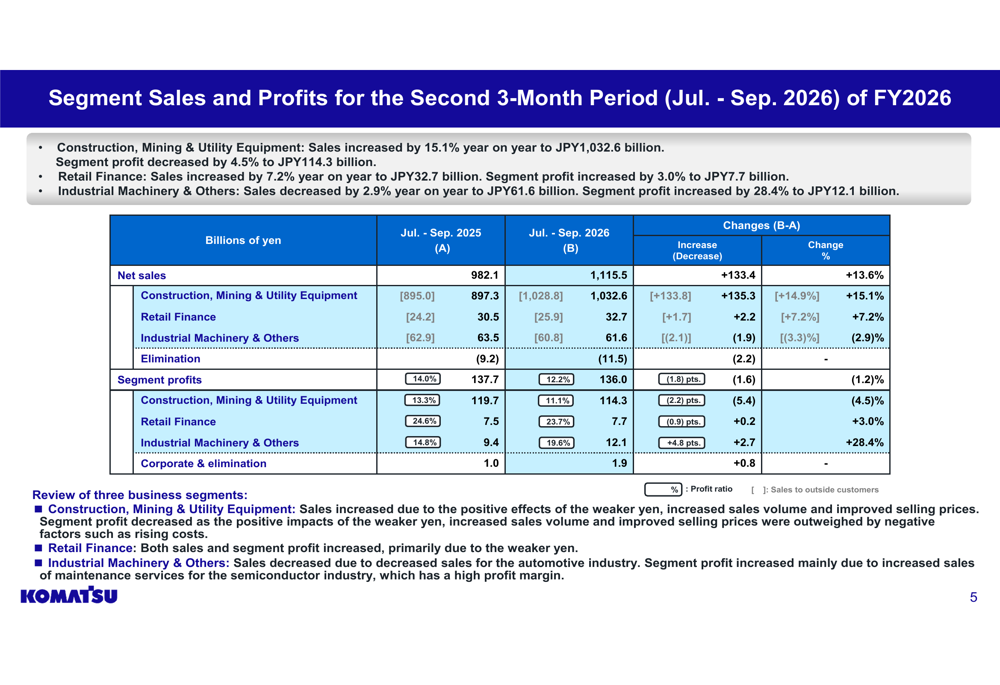 The Retail Finance segment posted more balanced growth, with sales up 7.2% to ¥32.7 billion and segment profit rising 3.0% to ¥7.7 billion, primarily driven by the weaker yen. The Industrial Machinery & Others segment delivered the strongest profitability improvement, with segment profit surging 28.4% to ¥12.1 billion despite a 2.9% sales decline, as higher-margin semiconductor industry maintenance services offset weakness in automotive sales.
Regional Performance Dynamics
Komatsu’s geographic performance revealed stark regional divergence, with strength in the Americas and selective markets offset by weakness in Asia and Oceania. Construction, Mining & Utility Equipment sales to outside customers increased 14.9% year-over-year to ¥1,028.8 billion, though excluding foreign exchange effects, the increase was a more modest 5.9%.
The regional sales breakdown demonstrates where Komatsu found growth and where it faced headwinds:
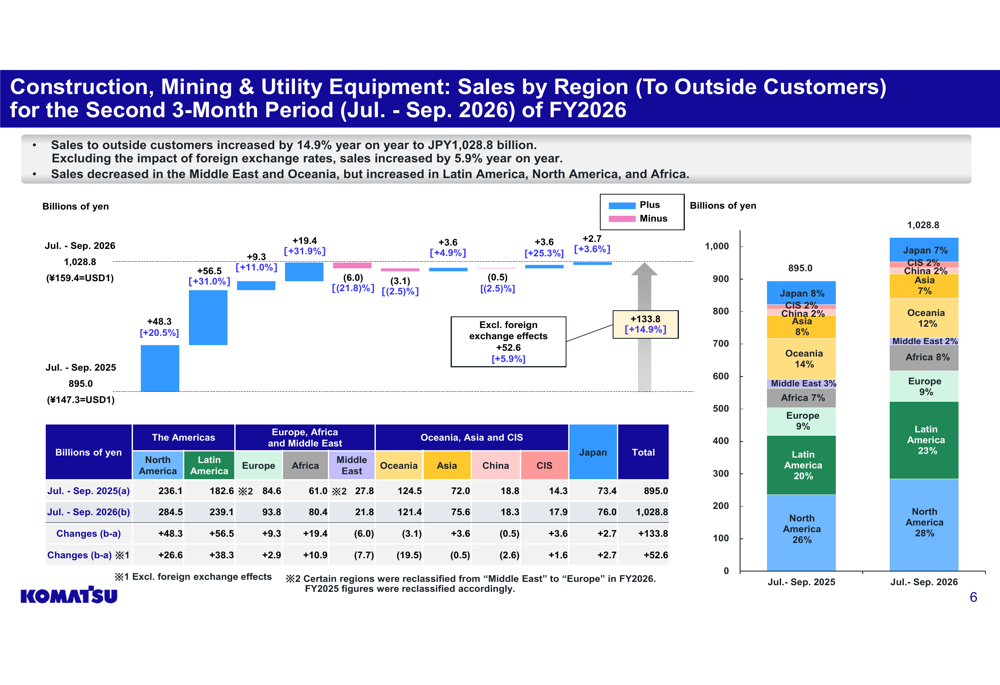 North America emerged as a key growth driver, with sales surging 20.5% (or ¥48.3 billion) year-over-year, driven by robust demand from the rental sector for data center construction and solid mining and energy sector activity. Latin America posted even stronger percentage growth at 31.0%, reflecting continued strength in copper and gold mining equipment demand.
Conversely, Oceania sales declined 2.5% as mining activity moderated, while the Middle East saw a sharp 21.8% decline due to regional instability. Asia edged down 2.5%, reflecting weakness in coal mining equipment demand, particularly in Indonesia.
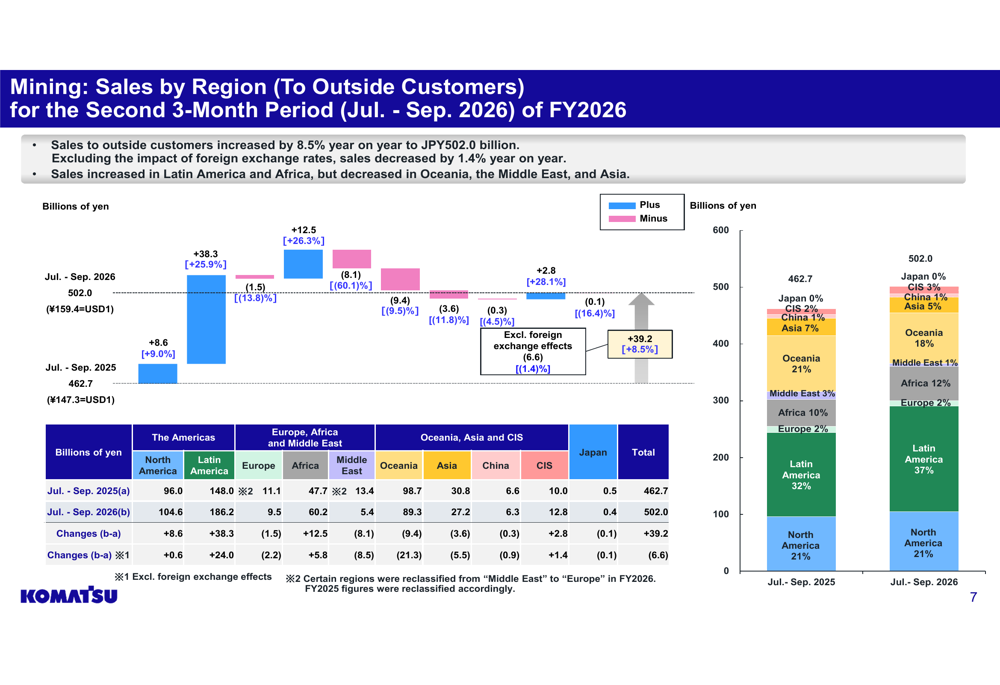
Within the mining equipment category specifically, sales increased 8.5% to ¥502.0 billion, though this masked a 1.4% decline when excluding currency effects:
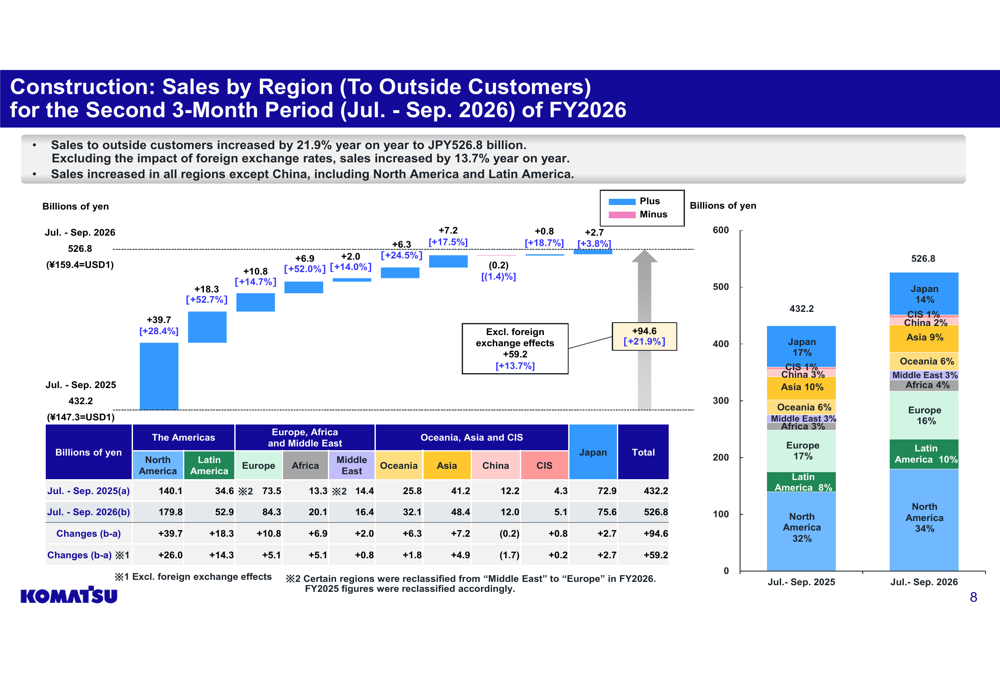
 Construction equipment showed broader-based strength, with sales up 21.9% to ¥526.8 billion (13.7% excluding FX effects), with increases across nearly all regions except China:
First-Half Performance and Trends
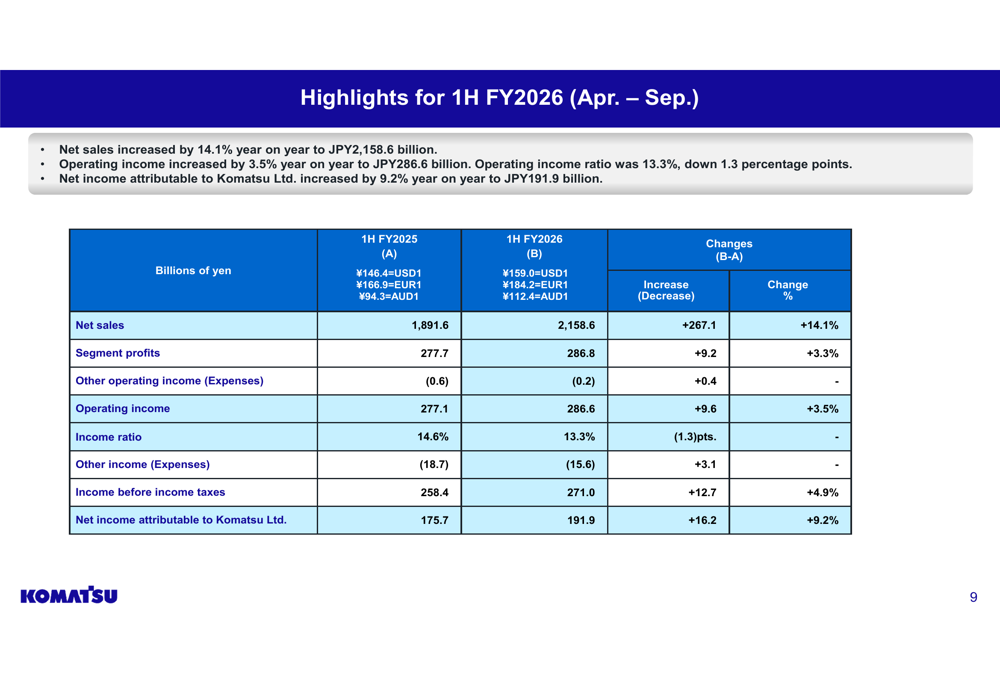
For the full first half of fiscal 2026, Komatsu’s results demonstrated similar patterns to the second quarter, with strong sales growth but more moderate profit expansion. Net sales increased 14.1% to ¥2,158.6 billion, while operating income rose just 3.5% to ¥286.6 billion, resulting in an operating income ratio of 13.3%, down 1.3 percentage points year-over-year.
The half-year financial summary reveals the persistent margin pressure:
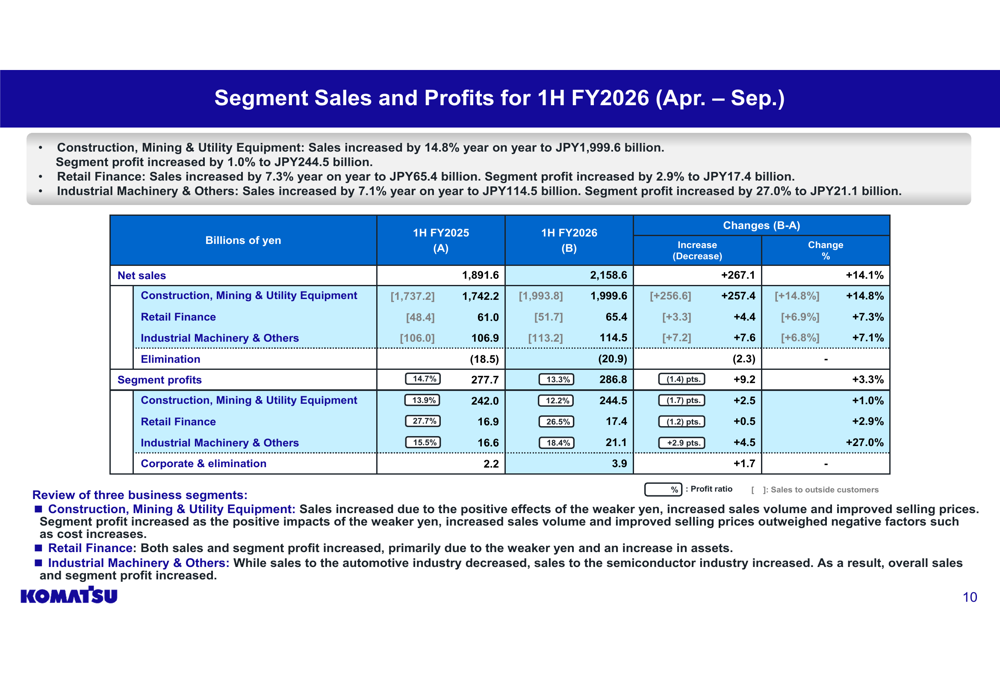
 Segment performance for the half-year period reinforced the quarterly trends, with Construction, Mining & Utility Equipment sales up 14.8% but segment profit rising only 1.0%:
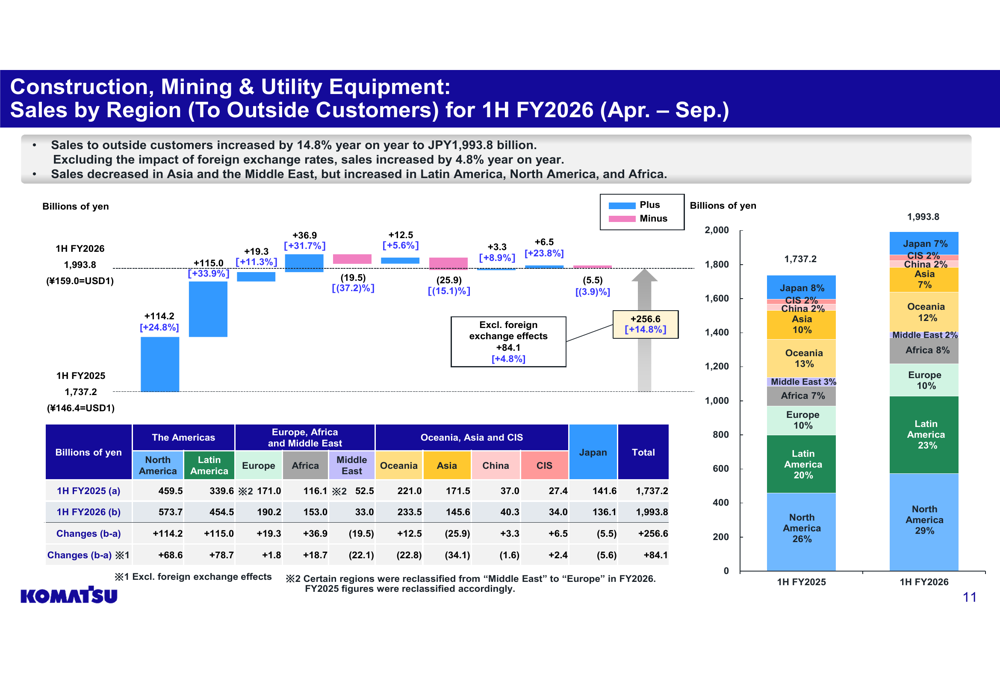
 The company’s regional performance for the first half showed North America sales surging 24.8% and Latin America up 33.9%, while Oceania declined 15.1% and the Middle East fell 37.2%:
Cost Pressures and Margin Dynamics
A critical element of Komatsu’s second-quarter and first-half performance was the significant headwinds from costs that limited operating leverage despite strong sales growth. The company provided detailed waterfall charts breaking down the drivers of sales and segment profit changes for its Construction, Mining & Utility Equipment business.
The following analysis illustrates how positive factors were partially offset by cost increases:
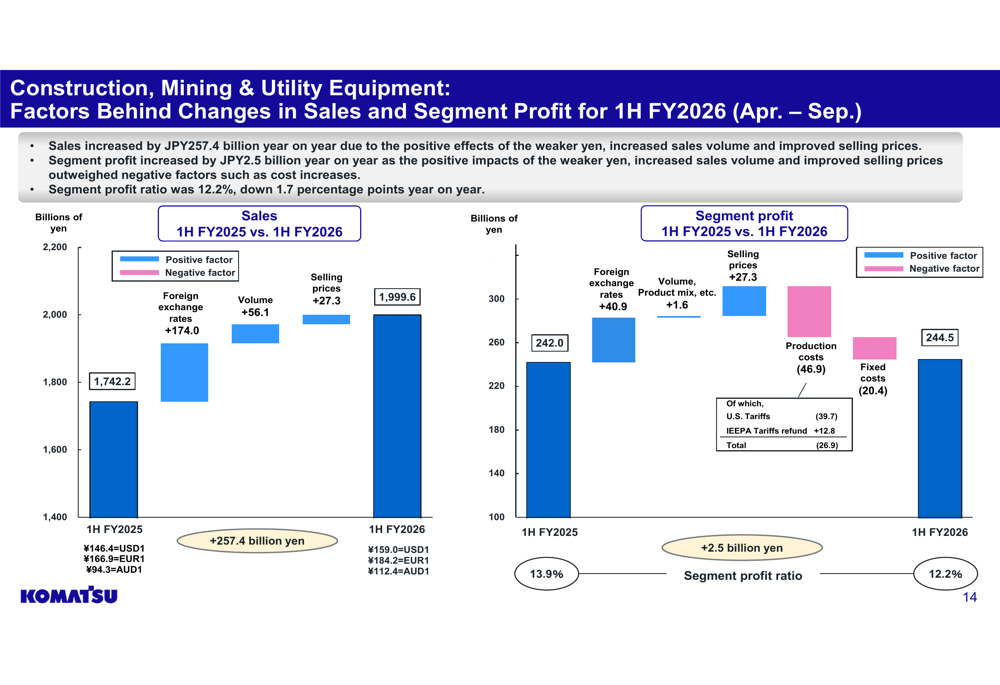 For the first half, foreign exchange rates contributed ¥174.0 billion to sales growth, while volume added ¥56.1 billion and improved selling prices contributed ¥27.3 billion. However, on the profit side, production costs increased by ¥46.9 billion and fixed costs rose ¥20.4 billion. Within fixed costs, U.S. tariffs represented a ¥39.7 billion headwind, though this was partially offset by ¥12.8 billion in IEEPA tariff refunds, resulting in a net tariff impact of ¥26.9 billion.
This cost pressure explains why the segment profit ratio declined from 13.9% in the first half of fiscal 2025 to 12.2% in the current period, despite the strong revenue growth.
Product Mix and Aftermarket Performance
An important aspect of Komatsu’s performance was the relative strength of equipment sales versus parts and service revenue, which has implications for profitability given the typically higher margins on aftermarket business. The company’s sales breakdown by product type showed the aftermarket ratio holding relatively steady but not expanding significantly.
The annual and quarterly trends in equipment versus parts and service sales are illustrated below:
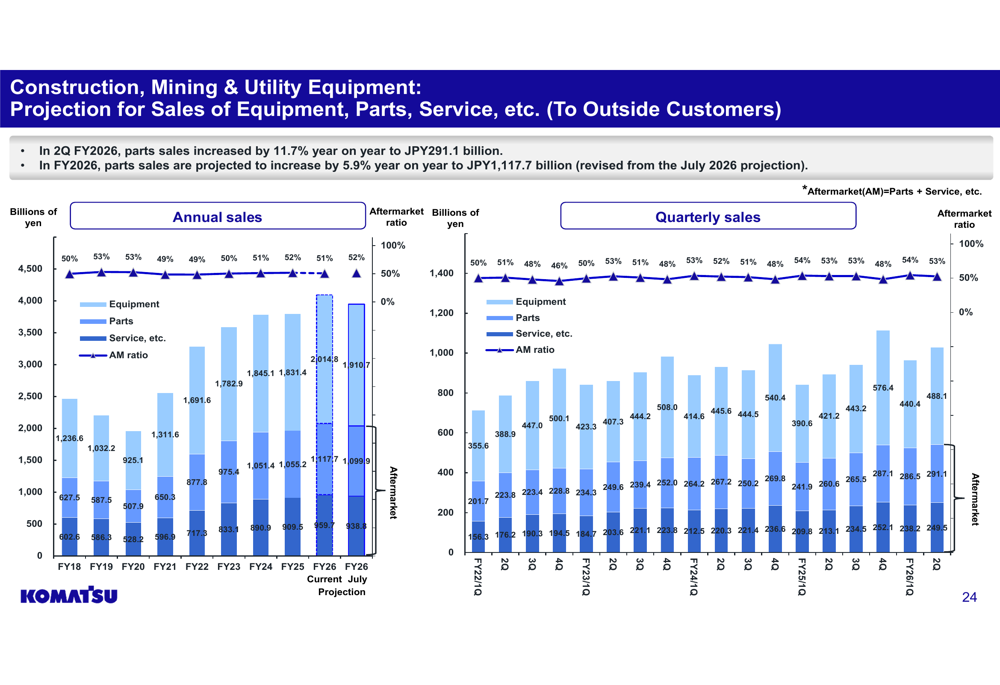 For the second quarter of fiscal 2026, parts sales increased 11.7% year-over-year to ¥291.1 billion, representing solid growth but slower than the overall equipment sales pace. The aftermarket ratio (parts plus service as a percentage of total sales) was 48% in Q2, within the typical range but not showing the expansion that would support margin improvement.
For the full fiscal year 2026, Komatsu projects parts sales to increase 5.9% to ¥1,117.7 billion, with the aftermarket ratio expected to remain around 52% for the full year—indicating that equipment sales are growing faster than higher-margin aftermarket revenue.
Forward-Looking Guidance and Projections
Despite the second-quarter profitability challenges, Komatsu raised its full-year fiscal 2026 guidance for the second time, reflecting confidence in continued demand strength and improved cost dynamics in the second half. The company now projects net sales of ¥4,450.0 billion (up 7.7% year-over-year), operating income of ¥585.0 billion (up 3.1%), and net income of ¥382.0 billion (up 1.5%).
The updated projections represent increases of ¥148.0 billion in sales, ¥30.0 billion in operating income, and ¥33.0 billion in net income compared to the July 2026 forecast:
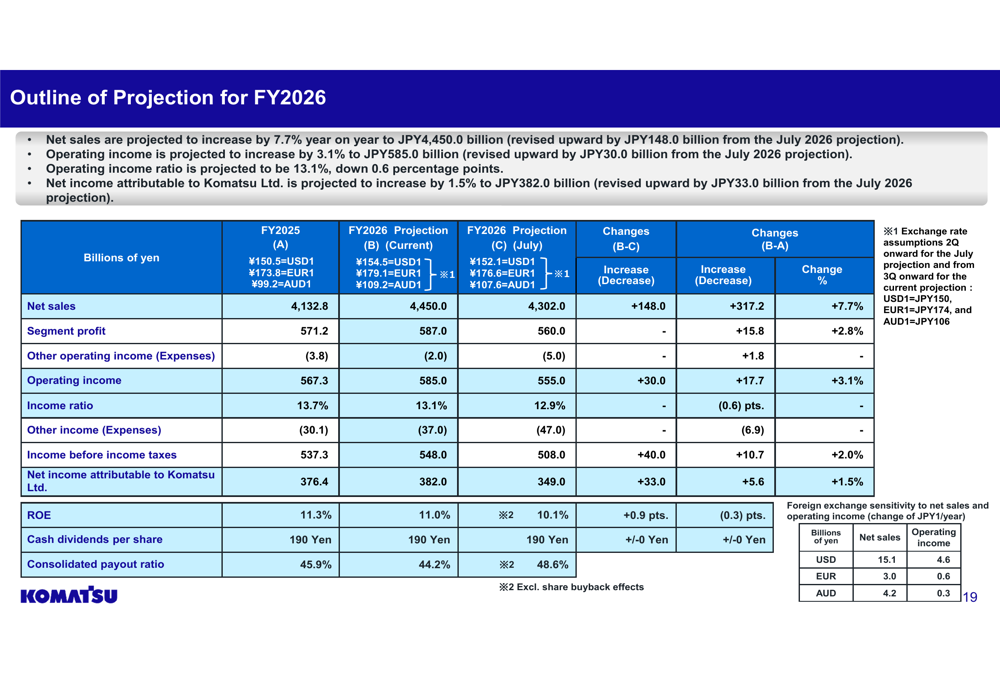 The guidance assumes exchange rates of ¥150 per dollar, ¥174 per euro, and ¥106 per Australian dollar for the remainder of the fiscal year. The company also revised its tariff impact estimate, now expecting gross tariff costs of ¥44.8 billion offset by ¥27.0 billion in refunds, for a net negative impact of ¥17.7 billion—an improvement from earlier projections.
By segment, Construction, Mining & Utility Equipment sales are projected to increase 8.2% to ¥4,120.0 billion with segment profit up 2.6% to ¥504.0 billion. Retail Finance sales are expected to rise 2.7% to ¥129.5 billion with segment profit essentially flat at ¥36.5 billion. Industrial Machinery & Others is projected to see sales increase 7.9% to ¥257.5 billion and segment profit surge 16.0% to ¥44.0 billion, driven by semiconductor industry strength.
The projected drivers of full-year sales and segment profit changes show similar dynamics to the first half:
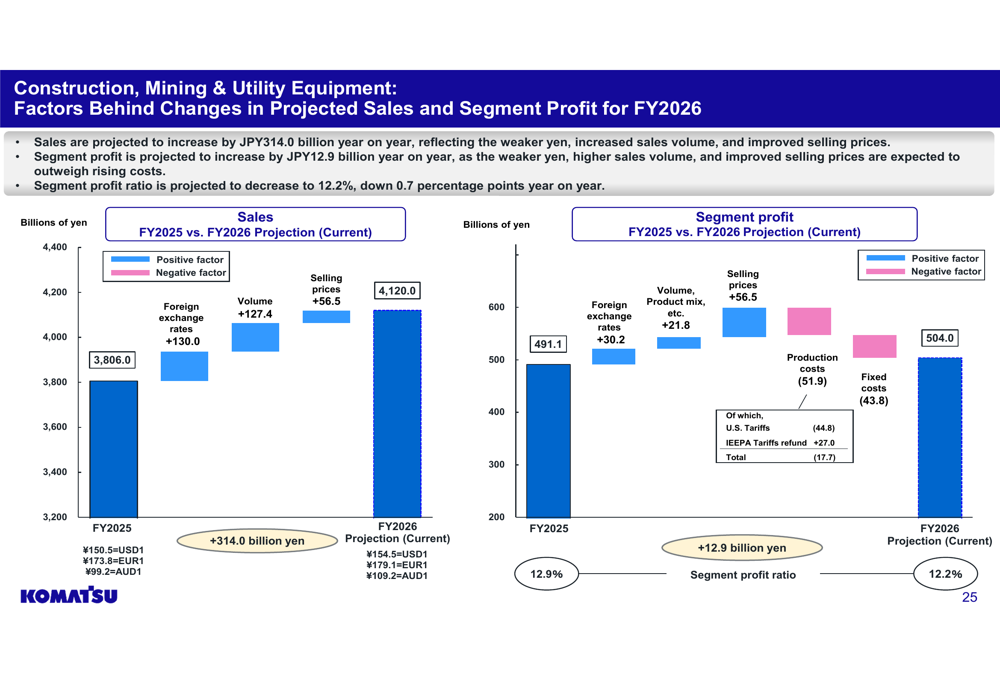 Management indicated that second-half profitability should improve as sales volume increases and some first-half shipments that were delayed move into later periods, helping to drive better operating leverage.
Market Demand Trends and Outlook
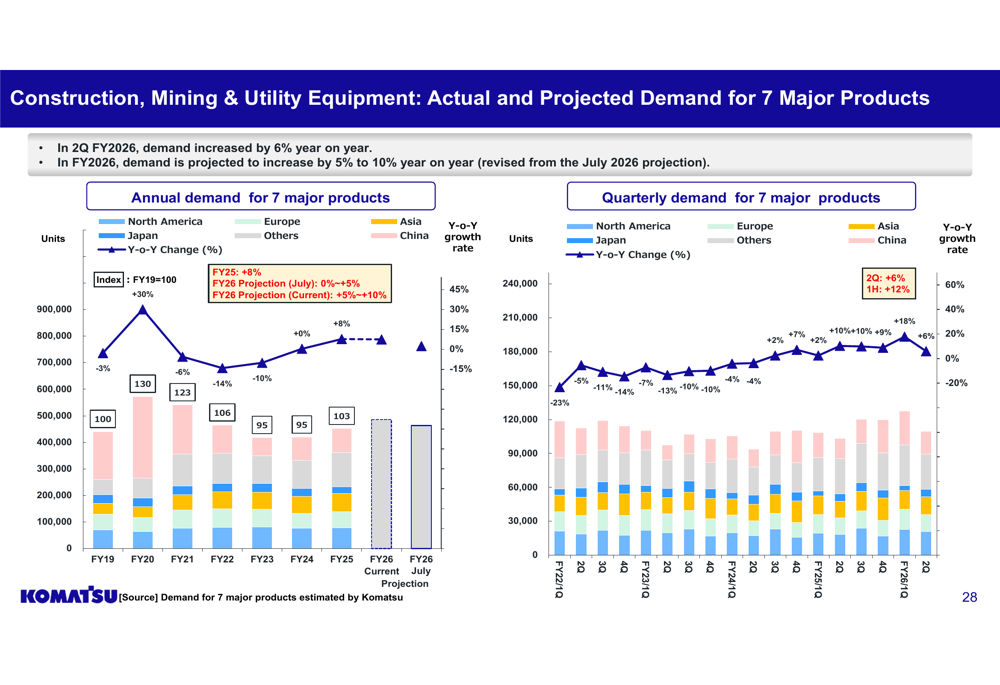
Komatsu’s presentation provided extensive detail on demand trends across its major product categories and geographic markets, offering insight into the company’s growth prospects. For its seven major construction and mining products, demand in the second quarter increased 6% year-over-year, with the company projecting full-year fiscal 2026 demand growth of 5% to 10%—an upward revision from the July projection.
The demand trajectory for major products is illustrated in the following charts:
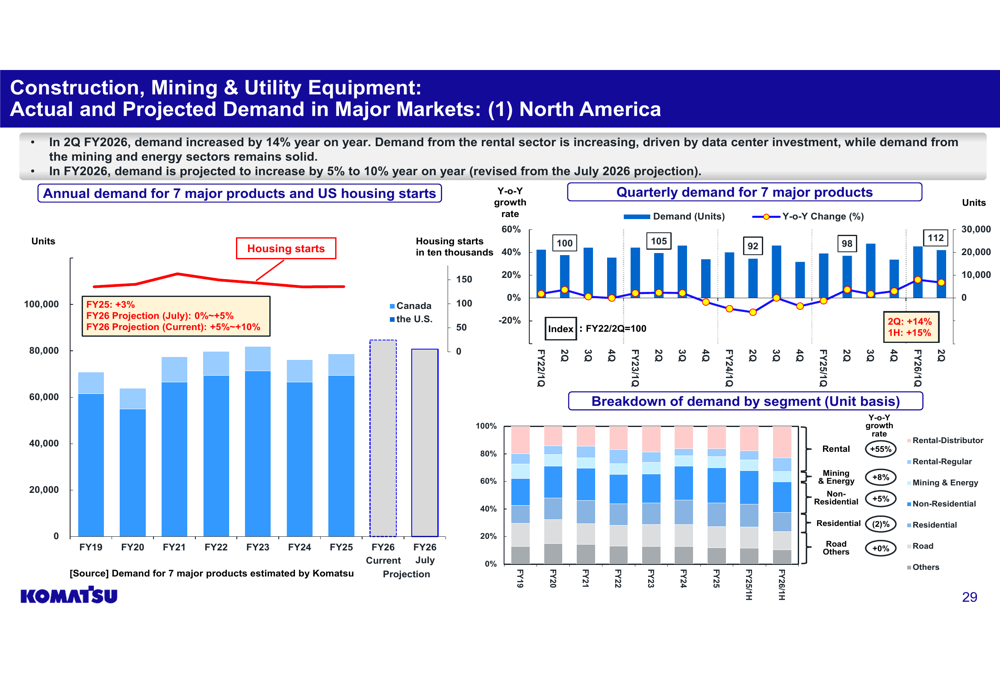
 North America continues to represent Komatsu’s strongest market, with second-quarter demand up 14% year-over-year and first-half demand rising 15%. The company highlighted particularly strong demand from the rental sector driven by data center investment, along with solid mining and energy sector activity. For the full fiscal year, North America demand is projected to increase 5% to 10%.
The North American demand breakdown by customer segment shows the rental sector leading growth:
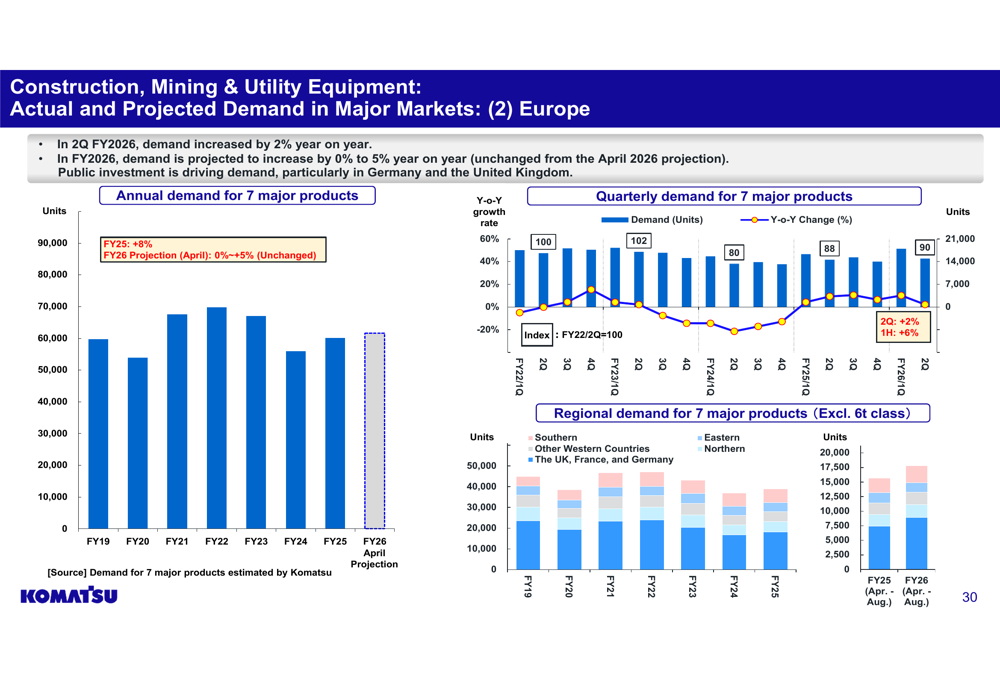
 In Europe, demand increased a more modest 2% in the second quarter, with full-year growth projected at 0% to 5%, driven primarily by public investment in countries like Germany and the United Kingdom:
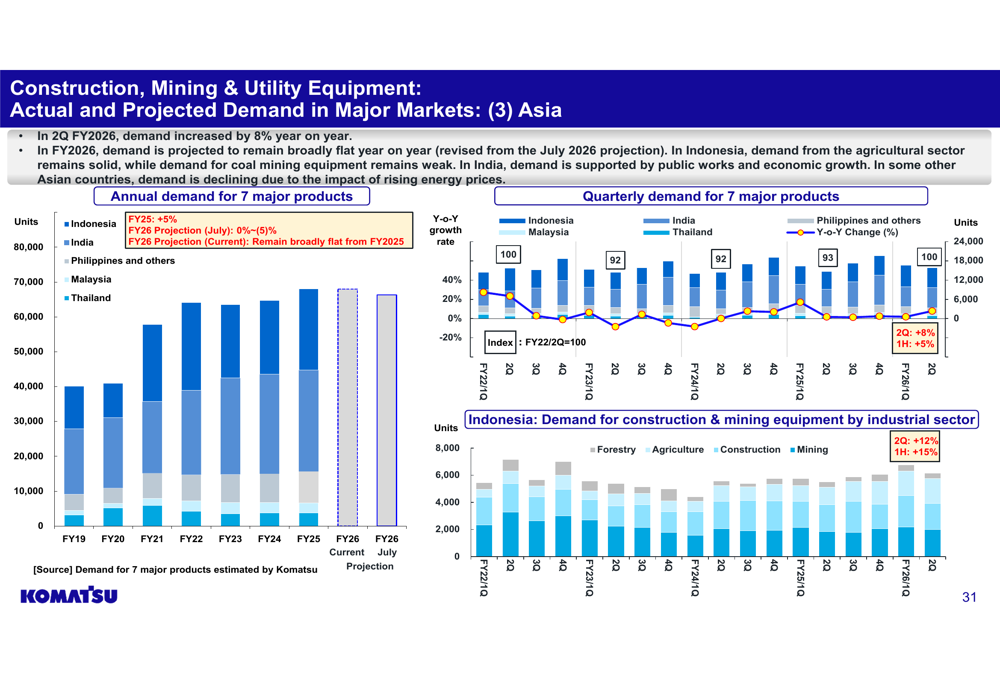
 Asia presented a more mixed picture, with second-quarter demand up 8% but full-year demand projected to remain broadly flat. Indonesia showed strength in agricultural sector demand while coal mining equipment demand remained weak, and India benefited from public works and economic growth:
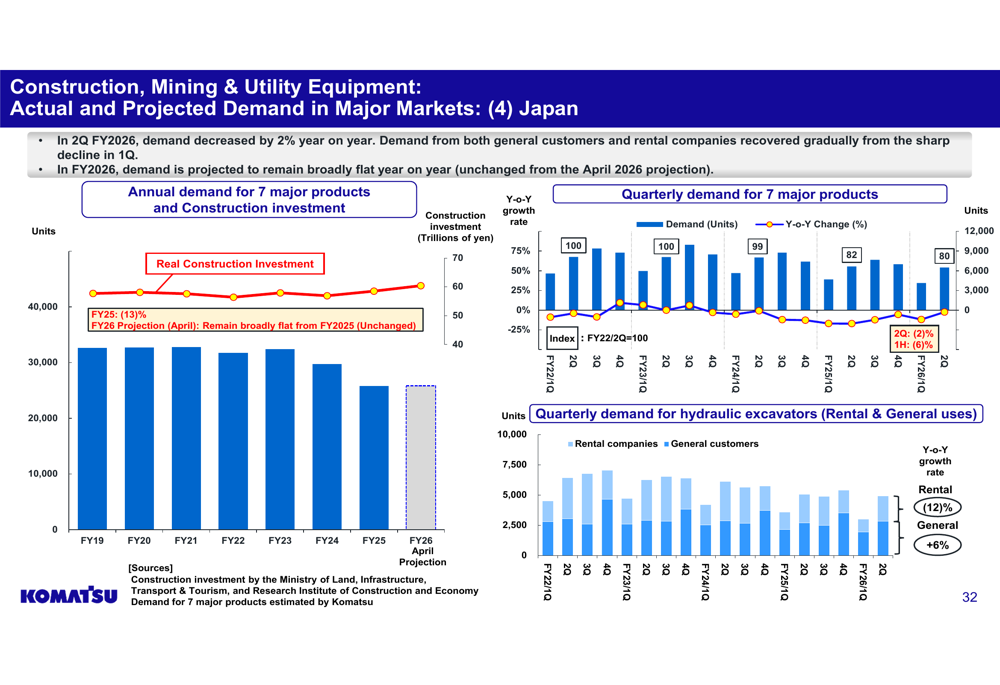
 Japan saw second-quarter demand decline 2% as the market gradually recovered from a sharp first-quarter decline, with full-year demand expected to remain broadly flat:
Mining Equipment and Commodity Price Context
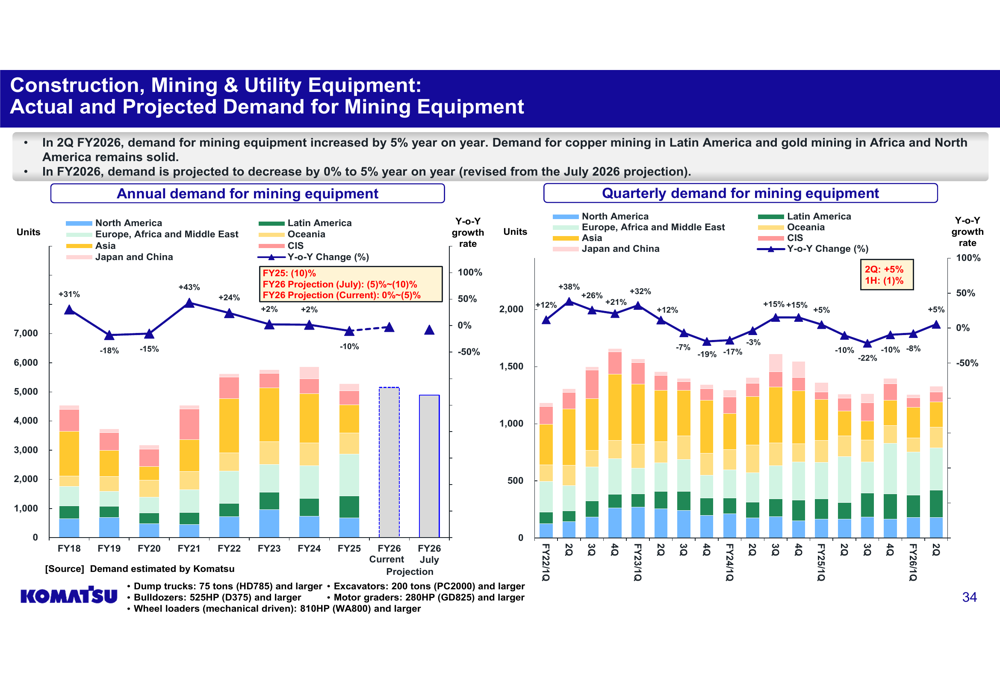
For mining equipment specifically, Komatsu reported second-quarter demand up 5% year-over-year, though full-year demand is projected to decline 0% to 5% as strength in copper and gold mining is offset by continued weakness in coal mining, particularly in Asia:
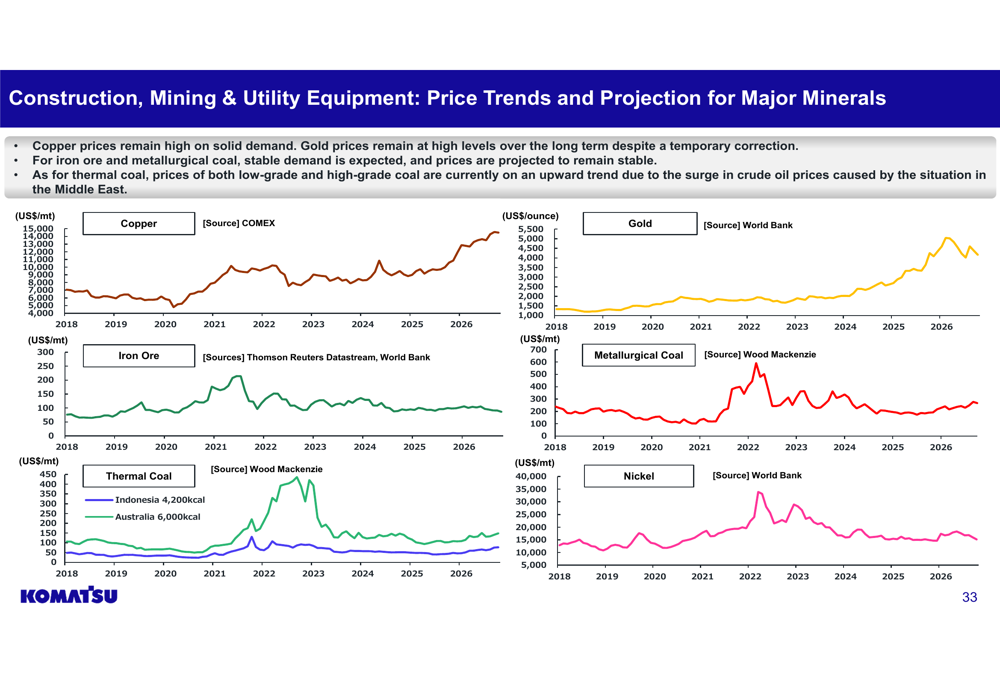
 The commodity price environment remains generally supportive for mining equipment demand, with copper and gold prices at elevated levels, while iron ore and metallurgical coal prices have stabilized. Thermal coal prices showed an upward trend due to crude oil price increases related to Middle East tensions:
Strategic Initiatives and Product Launches
Beyond the quarterly financial results, Komatsu’s presentation highlighted several strategic initiatives aimed at strengthening its competitive position and addressing evolving customer needs. The company announced a strategic partnership with AIM Intelligent Machines to accelerate autonomous construction technology, combining physical AI with Komatsu’s Smart Construction platform to deliver autonomous solutions for the Japanese and U.S. markets.
Komatsu also renewed and expanded its partnership with the Atlassian Williams F1 Team, with Komatsu engineers now contributing to the development of key components for Williams’ future Formula 1 cars, deepening the technical collaboration between the two organizations.
On the product front, the company launched several new models targeting specific regional markets and applications, including the PC75-10M0 7-ton-class hydraulic excavator for Southeast Asian markets (developed and manufactured in India), and the PC200-11M2 and PC210-11M2 20-ton-class excavators for Asia and emerging markets, designed to meet diverse customer needs with optimized economy and versatility.
Balance Sheet and Cash Flow
Komatsu’s balance sheet remained solid despite the margin pressures, with total assets increasing ¥103.2 billion from the fiscal year-end to ¥6,527.2 billion, primarily due to inventory growth. Inventories rose ¥92.8 billion to ¥1,694.7 billion, reflecting the company’s preparation for anticipated second-half demand.
The Komatsu Ltd. shareholders’ equity ratio declined 1.5 percentage points to 53.2%, remaining at a healthy level. Free cash flow for the first half was a positive ¥20.3 billion inflow, with operating cash flow of ¥139.3 billion partially offset by investing cash flow of ¥119.0 billion. The company projects full-year free cash flow of ¥270.0 billion.
The company maintained its annual dividend at ¥190 per share and completed a ¥100 billion share buyback program by September 15, demonstrating its commitment to shareholder returns despite the near-term profitability challenges.
Market Reaction and Valuation Context
The stock market’s sharp negative reaction to Komatsu’s results—a 9.29% decline to ¥6,182—reflected investor concern that margin pressures may persist longer than anticipated, even as the company raised its revenue guidance. The earnings miss of 5.18%, combined with the 1.8 percentage point operating margin contraction in the second quarter, overshadowed the 5.23% revenue beat and raised full-year projections.
The current stock price of ¥6,182 represents a decline from the 52-week high of ¥7,980 but remains well above the 52-week low of ¥4,914. At current levels, the stock trades at a price-to-earnings ratio of approximately 14.6x, with a return on equity of 12% over the last twelve months and a dividend yield of approximately 3%. The company has maintained dividend payments for 35 consecutive years, underscoring its financial stability and shareholder orientation.
The market’s focus on profitability rather than revenue growth suggests investors are concerned about Komatsu’s ability to translate strong demand into earnings growth given the persistent headwinds from tariffs, material costs, and product mix. Management’s confidence in second-half margin improvement will be tested in the coming quarters as the company seeks to demonstrate that the first-half cost pressures were temporary rather than structural.
|








|