
 









|
Signature Sponsor


November 17, 2026 - Carbon Capture, Utilization and Storage (CCUS), Carbon Dioxide Removal (CDR) and the global effort to bring temperatures back below 1.5°C have gained further prominence in a new draft decision released by the COP31 Presidency. The proposal outlines significant ambitions for scaling carbon management technologies by 2035, placing them more firmly within the international climate policy discussion. The document, prepared following consultations with national delegations, identifies carbon capture and removal as important components of the response to global warming.

The points concerning carbon capture and CDR from the draft. Source: UNFCCC
Its publication comes as governments and industry participants increasingly look beyond conventional emissions reductions towards technologies capable of addressing residual emissions and removing CO2 already present in the atmosphere. However, the commercial maturity, financing requirements and environmental implications of these solutions remain important considerations. The proposed language also reflects growing momentum around carbon management at COP31. As previously explored in Carbon Herald’s coverage of carbon capture, removal and Article 6, turning political recognition into operational projects and viable markets remains a central industry challenge.
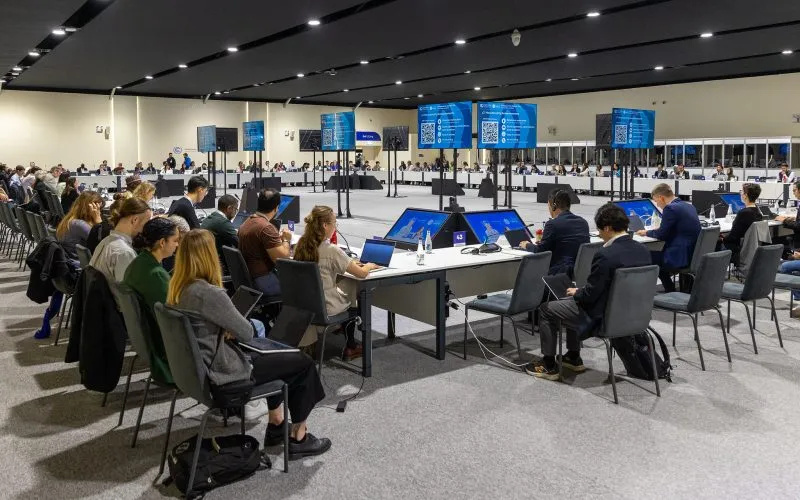
Party delegates and experts at COP31.
Photo: UN Climate Change – Kubilay Ciftci
CCUS Ambitions Reach Gigatonne Scale Paragraphs 59 and 60 of the draft specifically address technology deployment. The text welcomes efforts to accelerate CCUS and CDR development and deployment, while calling on countries to contribute to global CCUS capacity reaching at least 500 million tonnes of CO2 by 2035, reflecting current policies. It also establishes a more ambitious pathway of 1.3 billion to 2.5 billion tonnes of CO2 annually by the same year. Industry participants are encouraged to increase research and development and advance existing projects, particularly in hard-to-abate sectors. CDR Comes With Environmental Conditions The proposal recognizes that carbon dioxide removal will be necessary to bring warming below 1.5°C. However, it explicitly states that removals must complement, rather than replace or postpone, substantial emissions reductions. Environmental safeguards and respect for Indigenous Peoples and local communities are also identified as essential conditions for deployment. Negotiations Still Ahead Importantly, the document is not an agreed COP31 outcome. The Presidency has clarified that the initial draft reflects differing national positions and does not represent consensus. Whether its CCUS and CDR provisions survive subsequent negotiations remains uncertain. The next negotiating rounds will therefore determine whether these ambitious targets become part of the final climate agreement or remain proposals on the negotiating table. |








|