








|
Signature Sponsor


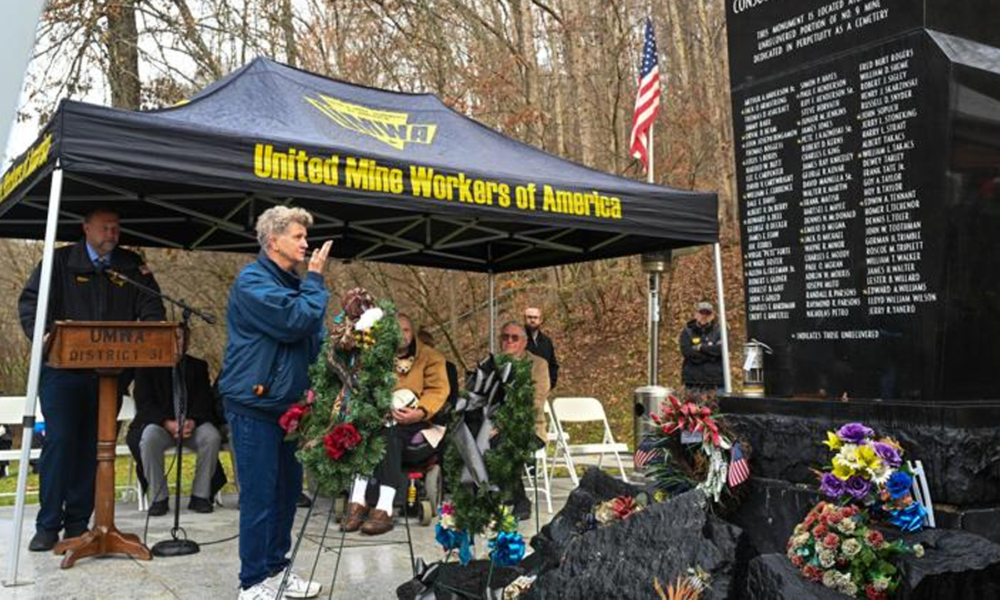
November 18, 2026 - A prayer opened Sunday’s annual memorial for the 1968 Farmington No. 9 mine disaster. “Heavenly father, I thank you for this day you’ve given us. I thank you for each and every person here today, Lord,” Pastor Keith Swiger said. “I ask that the blood that was shed here not be in vain, Lord. Our laws, state and federal, the pen was dipped in these very men’s blood to write the laws. And we’re giving that to you, Lord, so it won’t be taken in vain.” Union leaders relied on solemnity to drive the importance of mine safety laws at Sunday’s memorial service. Each year, the mine workers and union leaders commemorate the 78 miners who were killed when the Farmington No. 9 mine that exploded in 1968. The memorial is hallowed ground for the men who never came home and are still entombed among the coal they mined. The backdrop for the emphasis on safety was the Mine Safety and Health Administration’s changes to a silica rule which was adopted in 2024. Silica dust, which resembles microscopic shards of glass, is a by product that emerges during coal and other mining operations. When inhaled, silica shreds delicate lung tissue, and causes debilitating disability among miners.
Mineworker union leaders spent a decade fighting for better protections against silica dust. MSHA adopted a safety rule around silica dust in 2024. However, the Trump administration spent two years revising the rule, and published a heavily revised rule on Nov. 12, 2026. Union leaders like Brian Sanson decried the changes, saying it weakened mine safety standards for workers in the name of profit. “The people running the agency should be ashamed in themselves,” Sanson told the gathered crowd. “That rule was created to protect coal miners, not to protect coal company profits or mining company profits.” Michael Philippi, secretary-treasurer of the United Mine Workers of America, also said MSHA has lost its way. He said the way to honor the memory of the 78 men still entombed in the No. 9 mine is to make sure more miners come home safe. He said the Federal Coal Mine Health and Safety Act of 1969 and the Mine Act of 1977 were part of the response for safer mine working conditions after the disaster at Farmington No. 9. “These protections are part of their legacy,” he said. Tyler Peddicourt, assistant district manager of of MSHA’s office in Morgantown, and Mike Stark, MSHA staff assistant, attended the Nov. 15 memorial. Sanson and other union leaders urged them to do better. Phillippi said “somebody needs to go and ask these people what side they are on.” Peddicourt declined to provide a response to the comments made about MSHA at the memorial. He directed any request for comment to MSHA’s media relations office. However, Peddicourt appeared frustrated by his inability to comment. He said he would have comments on his own outside of MSHA, but did not have the authority to share them. After being prodded on whether miners at the memorial deserved an answer to the concerns about the silica rule, he said “I’m with you,” but continued forwarding queries to MSHA’s media relations team. Peddicourt may have been between a rock and hard place. Sanson was clear, saying MSHA’s mining inspectors are on the ground inspecting the coal mines, and are not the ones making rules and decisions. They come to the memorial every year to commemorate the 78 miners who are still underground. He said the agency is grossly understaffed as a result of last year’s DOGE activities. Elon Musk led the gutting of federal agencies like MSHA last year, and targeted 34 Mine Safety Offices for closure. The administration later reversed course but still closed offices, removed the commissioner and delayed implementation of the silica rule. “We have an enforcement agency that is not doing their job and isn’t replacing the people who are actually tasked with being in the coal fields and inspecting these coal mines and making sure they’re safe,” Sanson said. Sanson said the union intends to fight for miner safety. Each rule protecting mine workers was written in blood. The revisions to the silica safety rule have to undergo a public comment period. “We’re going to make comments, I’m sure they’re going to fall on deaf ears,” Sanson said. “And we’re probably going to take this to the courts.” Richard Harrison, a heavy equipment operator for the Marion County Mine, said the yearly memorial hits close to home for him. The mine where the 1968 explosion happened is next to Harrison’s mine. He hopes Peddicourt takes what he heard at the memorial service back to his bosses at MSHA. “I hope he goes back and tells his bosses that they really need to look at this ruling again,” he said. “Because the best thing to come out of the coal mine is the miner itself.” |








|