








|
Signature Sponsor


November 24, 2026 - According to a report by The Economic Times on November 18, the global coal market is currently witnessing two seemingly contradictory trends.
Consumption of this fuel has shown remarkable resilience. Among the 195 nations participating in the UN Climate Change Conference (COP31) in Antalya, Turkey, the combined coal demand of 193 of these countries fell by approximately 10% between 2019 and 2025—a positive development, were it not for the exclusion of China and India.
In reality, however, China and India together account for 7 out of every 10 tons of coal consumed globally. Between 2019 and 2025, their coal consumption grew by 13% and 28%, respectively.
Coupled with policies in many countries that continue to favor coal, this has kept global demand hovering at around 9 billion tons annually since 2023—precisely at a time when the world urgently requires a rapid and irreversible decline.
Yet, high consumption levels do not necessarily translate into a prosperous environment for coal mines. While China and India have provided a buffer for their domestic power generators and miners through favorable contractual terms, coal producers and exporters in other nations lack such protection.
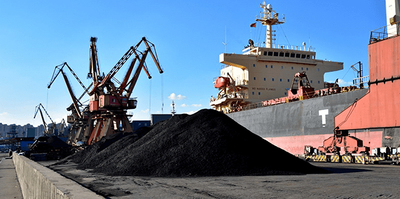
With the global coal industry suffering widespread losses, the seaborne coal trade has effectively become a "Squid Game"-style battle for survival.
Russia and Colombia—major suppliers of coal to Turkey—have been hit particularly hard. The Russian government estimates that roughly 70% of the country’s coal companies are unprofitable, with the sector potentially facing a loss of 324 billion rubles (approximately $3.9 billion) this year. Even if prices were to rise, the coal industry is projected to remain in the red through 2027—marking four consecutive years of losses. In the Kuzbass Basin—which accounts for roughly half of Russia’s coal production—7,000 jobs were lost last year, and about a third of the mining companies have either shut down or are facing financial distress.
Mines in Colombia, which once powered Europe during the 1990s and early 2000s, are also feeling the strain. Exports have fallen by nearly a quarter, dropping to their lowest level since 2003. Last year, Glencore recorded an impairment charge on Cerrejón—a massive Latin American coal complex with 5 billion tonnes in reserves—valued at $859 million. The company plans to return the mine to the government when its mining concession expires in 2034.
South Africa’s export-oriented coal mines are now barely profitable, making the country a likely candidate for the next wave of distress.
The fact that coal mining operations continue to run in such a bleak environment reveals the brutal economic logic of a declining commodity: mine owners do not need to wait for demand to recover; they simply need their competitors to exit the market first.
If enough Russian coal mines shut down, the global seaborne coal market would tighten, driving up prices and potentially returning operations in Colombia and South Africa to profitability.
This might buy them some time—at least until demand dips once more, putting them back on the brink. For the other major players in the seaborne coal trade—the United States, Indonesia, and Australia—the road ahead looks less like a reprieve and more like a stay of execution.
There is a historical symmetry to this decline. The seaborne coal trade is being squeezed by the same relentless economic forces that now threaten the future of liquefied natural gas (LNG). Both industries emerged in the wake of the 1970s oil crisis, a period when importing nations sought alternatives to reduce their dependence on Middle Eastern crude oil. Coal and natural gas may be relatively inexpensive when consumed near their source—especially since their pit-head or well-head prices fail to account for the climate and health damages caused by the pollution they generate. However, the economics deteriorate rapidly once these fuels are transported by rail or ship to the other side of the globe. High logistics costs make it difficult for them to compete in energy markets, particularly as the falling costs of clean, renewable electricity continue to drive down overall energy prices.
Consider the coal mines in Siberia: for every $100 that power companies pay for a ton of exported Siberian coal, less than $25 actually makes it back to the mine site. The remainder is consumed by the astronomical logistics costs required to transport the coal to ports along the Pacific coast.
This is the current reality. Despite shortages of liquefied natural gas (LNG), policy support for fossil fuels, and government regulations that hinder the expansion of wind and solar power, coal-fired electricity generation continues to decline.
The coal industry once envisioned a future defined by growing demand and substantial profits—but those days are long gone. Today, what passes for "good news" is simply that consumption is not falling as rapidly as it perhaps should.
It is truly bizarre to frame the closure of mines, layoffs, financial losses, and the write-down of asset values as a form of "success" for the coal industry.
The future of energy lies in localized solutions. Coal, however, is not part of that future—and the solution to the "coal problem" certainly does not lie at the mine site itself. |








|