








|
Signature Sponsor


November 25, 2026 -
Data source: U.S. Energy Information Administration, Monthly Energy Review
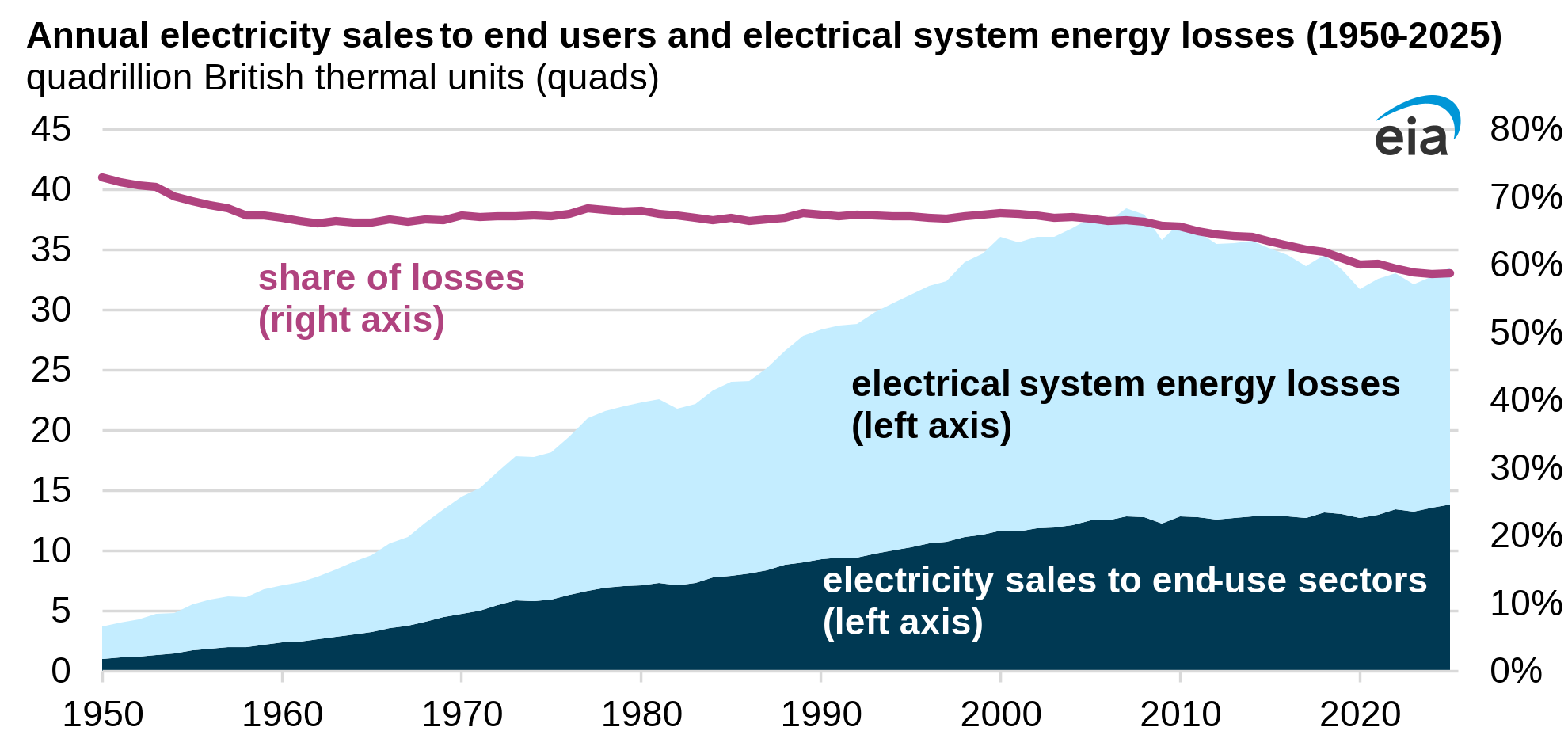
In 2025, the United States consumed 34 quadrillion British thermal units (quads) of primary energy to deliver 14 quads of electricity sales to end users, with nearly 60% lost. About 95% of the losses came from converting primary energy into electricity, mostly due to lost heat from burning coal and natural gas. The remaining 5% was lost in the course of delivering electricity across grid infrastructure to homes and businesses. Electricity is a secondary energy source that is produced when primary energy sources, such as natural gas, nuclear, and wind, are converted into electric power. Usually, this conversion means:
When primary energy is transformed into electricity, some of the input energy is lost in the process. For example, the average potential energy contained in coal used by U.S. power plants is about 10,077 British thermal units per kilowatthour (Btu/kWh), more than twice the energy contained in electricity output, which is the constant 3,412 Btu/kWh. For coal, natural gas, and petroleum plants, we survey both the energy that power plants consume and the electricity they produce. The difference between the two is the conversion loss. Most of the energy potential is lost as heat in combustion that escapes the system into the surrounding environment. Other conversion losses include fuels that do not fully burn and system efficiency limits. For noncombustible renewable energy sources—wind, solar, hydropower, and geothermal energy—we account for only the output electricity and do not calculate conversion losses. The technology and the type of fuel used to generate electricity affect the efficiency of power plants. Coal-fired generation plants in the United States are often older and less efficient than many natural gas-fired plants. In U.S. power plants, generating a kilowatthour of electricity from coal requires on average about one-third more British thermal units of energy than producing a kilowatthour from natural gas.
Data source: U.S. Energy Information Administration, Monthly Energy Review
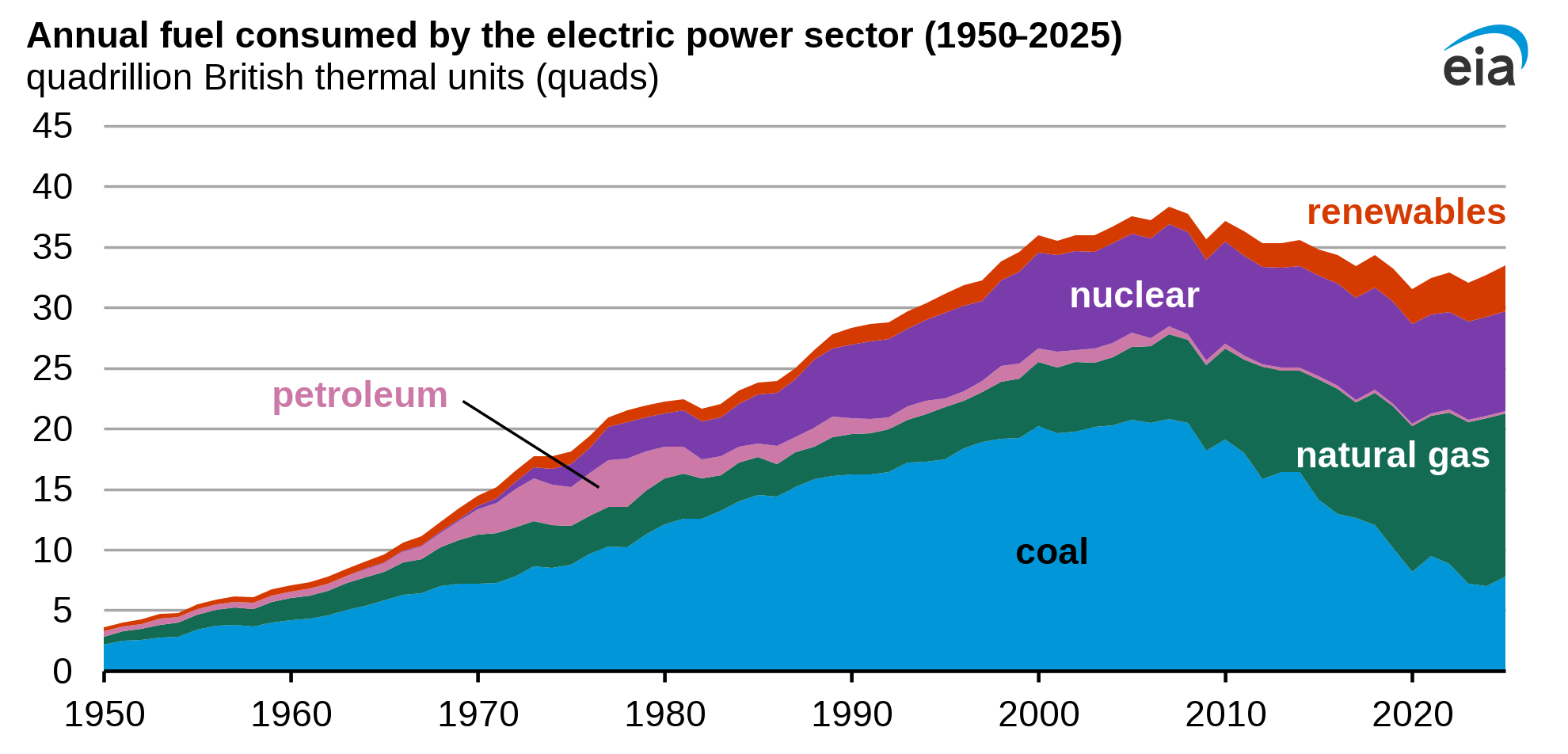
In recent decades, the fuel mix for U.S. electricity generation has shifted from mostly coal to a more diverse selection of fuels, including natural gas and renewable energy. In particular, the shift toward newer, more efficient natural gas-fired power plants in combined-cycle configurations has increased the average efficiency of fossil fuel-fired electric power plants, decreasing conversion losses.
Data source: U.S. Energy Information Administration, Electric Power Monthly and Monthly Energy Review
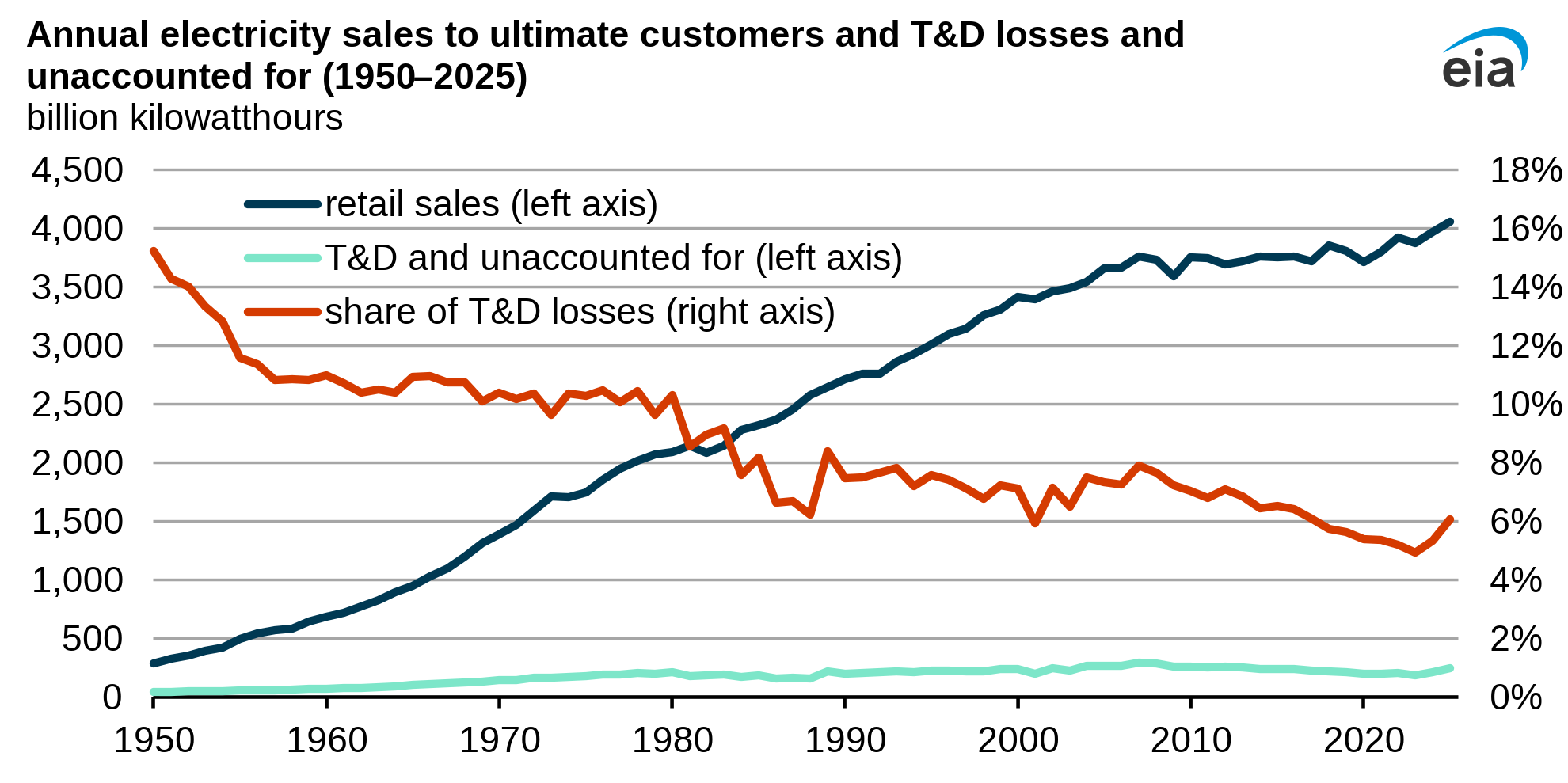
Note: T&D=transmission and distribution The electrical system also experiences transmission and distribution (T&D) losses when transforming and delivering electricity to consumers. T&D losses are much smaller than conversion losses but still significant. In 2025, T&D losses accounted for less than 1 quad of the energy consumed to generate electricity, compared with 18 quads lost to conversion. As the electric grid has grown more efficient, T&D losses have fallen as a share of retail electricity sales. |








|